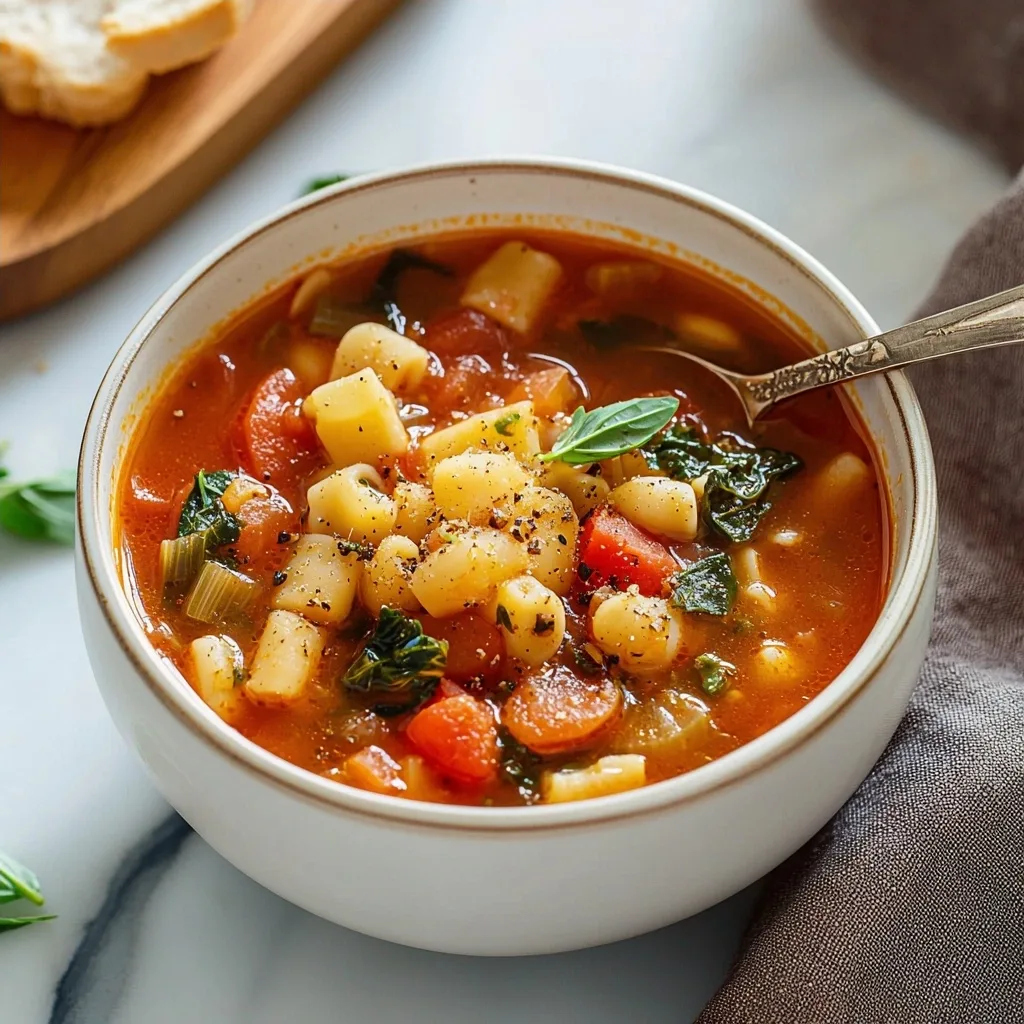
Classic minestrone soup is the ultimate comfort food that bridges the gap between garden-fresh simplicity and deep, savory satisfaction. Growing up, nothing beat the smell of a heavy stockpot simmering on the stove, and this vibrant bowl of vegetables and pasta captures that exact feeling of home.
This classic minestrone soup brings together hearty beans, seasonal vegetables, and tender pasta in a tomato-based broth that hits the spot every single time. It is a reliable recipe that I return to when I need something nourishing yet effortless, and I know you will find it just as essential in your weekly rotation.
What is Classic Minestrone Soup?
Classic minestrone soup is a hearty, vegetable-rich Italian staple known for its incredible versatility and robust flavor profile. Unlike thin, clear broths, this soup is thick, textured, and intentionally rustic, often serving as a full meal rather than just a starter.
The beauty of this dish lies in its lack of rigid rules. It traditionally combines a base of onions, carrots, and celery with beans and pasta, allowing for the inclusion of whatever seasonal vegetables are currently at their peak. It is a soulful, peasant-style dish that celebrates clean, wholesome ingredients above all else.
Reasons to Try Classic Minestrone Soup
If you need a reliable weeknight dinner that pleases a crowd and keeps well for leftovers, this recipe is your best friend. It is naturally vegetarian, packed with clean plant-based protein, and offers a massive nutritional punch without feeling heavy or slow to digest.
This is a particularly perfect recipe for families or busy professionals because it actually tastes better on the second day. Watching the pasta and beans absorb those incredible flavors overnight creates a depth that rivals professional café creations, all made right in your own kitchen.
Ingredients Needed to Make Classic Minestrone Soup
- 4 tablespoons extra-virgin olive oil, divided
- 1 medium yellow onion (finely chopped for a hidden base layer)
- 2 medium carrots (peeled and diced into rounds)
- 2 medium ribs celery (chopped fine)
- 1/4 cup tomato paste (to deepen the savory undertones)
- 2 cups seasonal vegetables (such as zucchini, butternut squash, or green beans)
- 4 cloves garlic (pressed or minced fine)
- 1/2 teaspoon dried oregano
- 1/2 teaspoon dried thyme
- 28 ounces diced tomatoes (canned with their juices)
- 4 cups vegetable broth (low sodium is best)
- 2 cups water
- 1 teaspoon fine sea salt
- 2 bay leaves
- Pinch of red pepper flakes
- Freshly ground black pepper (be generous)
- 1 cup orecchiette, elbow or small shell pasta
- 1 can (15 ounces) Great Northern or cannellini beans (rinsed well)
- 2 cups baby spinach or chopped kale
- 2 teaspoons lemon juice (adds a bright finish)
- Freshly grated Parmesan cheese (optional, for the top)
Instructions to Make Classic Minestrone Soup – Step by Step
Step 1: Start by warming 3 tablespoons of your extra-virgin olive oil in a large Dutch oven or sturdy stockpot over medium heat. When the oil begins to shimmer, drop in the onion, carrot, celery, the tomato paste, and a pinch of salt. Sauté these aromatics for about 7 to 10 minutes until they soften and the onions become translucent; this creates the essential foundation of flavor.
Step 2: Add your selection of seasonal vegetables, garlic, oregano, and thyme to the pot. Stir them frequently for about 2 minutes; this quick heat helps the garlic release its oils and ensures the dried herbs wake up and coat everything evenly in the pot.
Step 3: Pour in the diced tomatoes with their juices, the vegetable broth, and water. Stir in the salt, bay leaves, and the red pepper flakes. Give it a generous crack of black pepper, bring the whole mixture to a boil, then turn the heat down to a steady simmer. Place the lid on partially with a small gap for steam, and let it cook for 15 minutes.
Step 4: Remove the lid and add the pasta, beans, and your leafy greens. Continue to simmer the soup uncovered for another 20 minutes. Keep an eye on it to ensure the pasta cooks to a perfect al dente texture while the greens melt into the broth comfortably.
Step 5: Take the pot off the heat and fish out those bay leaves. Stir in the final tablespoon of olive oil and the lemon juice. The acidity of the lemon is the secret weapon here. Give it a final taste, add a little extra salt or pepper if needed, and serve it up immediately.
Chef’s Tips for a Perfect Result
- Always sauté the tomato paste with the base vegetables for a few minutes; this caramelizes it and removes the raw, metallic edge.
- Use room-temperature broth or water when adding to the pot to prevent the temperature from dropping too drastically and pausing the cooking process.
- If you are planning to keep leftovers, undercook the pasta by a minute so it does not turn mushy in the fridge.
- Adding the lemon juice at the very end is non-negotiable; it cuts through the richness and makes the flavors pop across the palate.
Variations and Substitutions
Vegan Option: Skip the Parmesan topping or replace it with a nutritional yeast blend to maintain that savory, nutty flavor profile without any dairy.
Gluten-Free Alternative: Substitute the standard pasta with a high-quality, sturdy gluten-free alternative like brown rice shells or lentil-based noodles that hold their shape.
Budget Swap: If you do not have fresh seasonal vegetables, a bag of high-quality frozen mixed vegetables works perfectly and reduces your prep time significantly.
How to Serve and Pair
Serve this soup in deep ceramic bowls to keep the heat in. It pairs beautifully with a crusty piece of toasted sourdough bread rubbed with minimal garlic. For a lighter touch, a crisp garden salad dressed in a bright vinaigrette provides a nice contrast to the heartiness of the soup.
Storage and Reheating
Refrigerator: Keep your soup in an airtight glass container for up to 4 days. The flavors will deepen significantly after the first night.
Freezer: Transfer cooled soup to freezer-safe bags or containers for up to 3 months. Leave some room at the top as the soup will expand when frozen.
Reheating: Bring a small portion to a simmer on the stovetop slowly. If the liquid has soaked into the pasta, feel free to add a splash of water or broth to loosen it back up.
Nutritional Values
- Calories: 280
- Protein: 9g
- Carbohydrates: 45g
- Fat: 8g
- Fiber: 7g
Approximate values.
Frequently Asked Questions (FAQ)
Can I use dried beans instead of canned?
You definitely can, but ensure they are soaked and fully cooked before adding them to the pot late in the cooking process.
How do I know when the soup is perfectly done?
The soup is ready when the pasta is cooked al dente and the carrots have softened enough to slice through easily with a fork.
Why is my soup flavorless after simmering?
It usually needs more salt or acidity; try adding an extra pinch of sea salt or a small squeeze of fresh lemon juice to bring the brightness back.
Can I make this soup ahead of time?
Yes, this is an excellent make-ahead meal that tastes even better the next day once the vegetables and herbs have had time to meld together.
What is the best way to customize this for my family?
The best way to customize it is to swap the vegetables based on what your family loves most, such as adding extra potatoes for heartiness or zucchini for a lighter texture.
Conclusion
This classic minestrone soup is the perfect balance of nourishing vegetables and satisfying textures, making it a reliable staple for any home cook. I encourage you to make it for your next family dinner and experience how a few simple ingredients transform into something truly special. The vibrant, clean finish from the fresh lemon and herbs is what makes this recipe absolutely irresistible every single time you cook it.
PrintClassic Minestrone Soup

Warm up with this hearty classic vegetarian minestrone soup packed with vegetables, beans, pasta, and herbs. It’s healthy, comforting, and easily made vegan by omitting the Parmesan cheese.
- Prep Time: 20 minutes
- Cook Time: 45 minutes
- Total Time: 1 hour 5 minutes
- Yield: 6 bowls
- Category: Soup
- Method: Stovetop
- Cuisine: Italian
- Diet: Vegetarian
Ingredients
- 4 tablespoons extra-virgin olive oil, divided
- 1 medium yellow onion, chopped
- 2 medium carrots, peeled and chopped
- 2 medium ribs celery, chopped
- 1/4 cup tomato paste
- 2 cups chopped seasonal vegetables (potatoes, yellow squash, zucchini, butternut squash, green beans, or peas)
- 4 cloves garlic, pressed or minced
- 1/2 teaspoon dried oregano
- 1/2 teaspoon dried thyme
- 1 large (28-ounce) can diced tomatoes with juices
- 4 cups vegetable broth
- 2 cups water
- 1 teaspoon fine sea salt
- 2 bay leaves
- Pinch of red pepper flakes
- Freshly ground black pepper, to taste
- 1 cup orecchiette, elbow, or small shell pasta
- 1 (15-ounce) can Great Northern or cannellini beans, rinsed and drained
- 2 cups baby spinach, chopped kale, or chopped collard greens
- 2 teaspoons lemon juice
- Freshly grated Parmesan cheese, for garnish (optional)
Instructions
1. Warm 3 tablespoons of the olive oil in a large Dutch oven or stockpot over medium heat. Add the onion, carrots, celery, tomato paste, and a pinch of salt. Cook, stirring often, for 7 to 10 minutes until softened.
2. Add the seasonal vegetables, garlic, oregano, and thyme. Cook, stirring frequently, for about 2 minutes until fragrant.
3. Pour in the diced tomatoes with their juices, vegetable broth, and water. Stir in the salt, bay leaves, red pepper flakes, and generously season with black pepper.
4. Bring the soup to a boil over medium-high heat. Partially cover the pot, leaving about a 1-inch gap, then reduce the heat to maintain a gentle simmer.
5. Simmer for 15 minutes. Remove the lid and add the pasta, beans, and greens. Continue simmering uncovered for about 20 minutes, or until the pasta is al dente and the greens are tender.
6. Remove from the heat and discard the bay leaves. Stir in the lemon juice and remaining tablespoon of olive oil. Taste and adjust seasoning with additional salt and pepper as needed. Serve garnished with Parmesan if desired.
Notes
For a vegan version, omit the Parmesan or use a vegan Parmesan alternative.
For a gluten-free version, substitute a sturdy gluten-free pasta.
Vegetarian Parmesan brands such as Whole Foods 365 or BelGioioso can be used if desired.