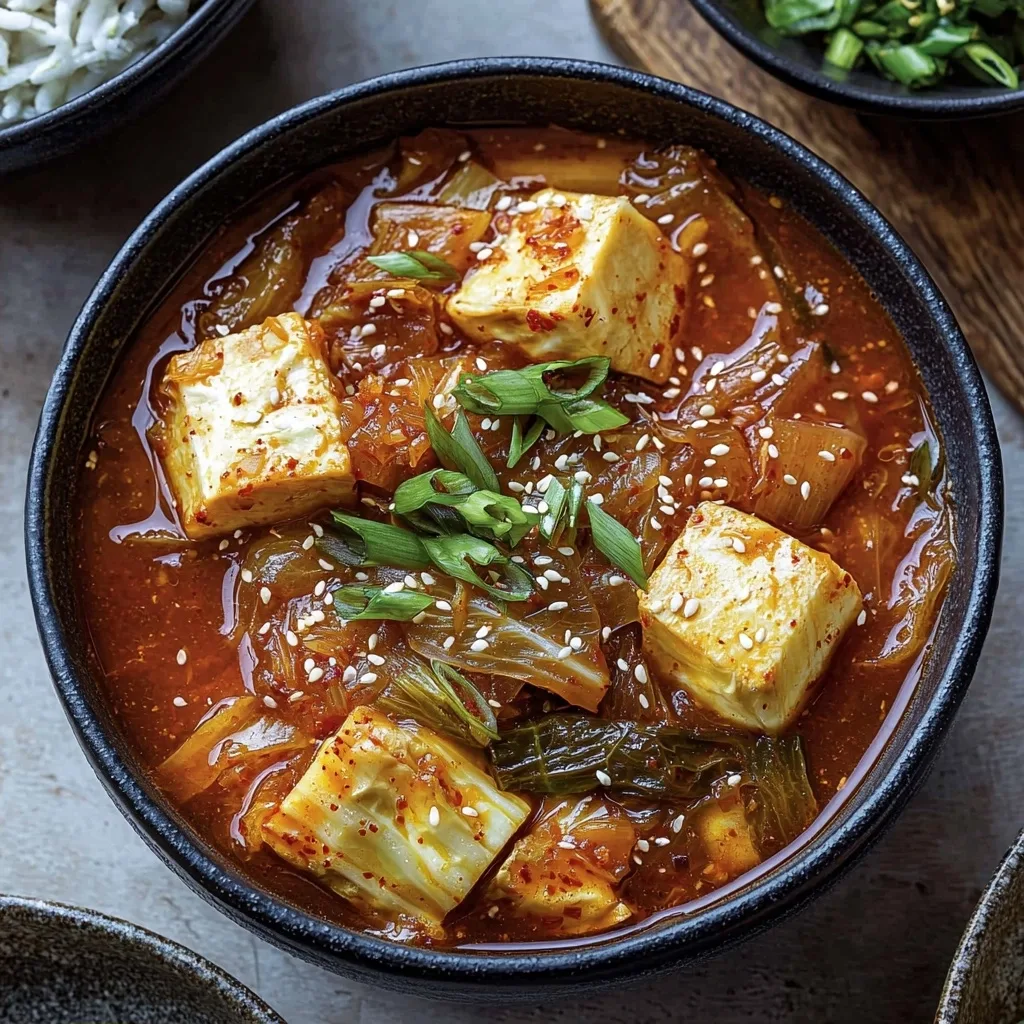
What is Vegetarian Kimchi Jjigae?
Vegetarian Kimchi Jjigae is a soul-warming Korean tofu stew that hits every single flavor note you crave. It is bold, tangy, spicy, and deeply comforting, making it a staple in any kitchen that values big, punchy flavors without the need for meat. At its heart, this stew celebrates the magic of fermentation. By using well-aged kimchi, you build a complex base of sour and savory layers that simmer into a rich, vibrant broth.
This dish reflects the incredible versatility of Korean home cooking. While many might recognize version made with pork belly, the vegetarian take leans heavily on the texture of silken tofu and the umami depth of vegetable dashi. It is a humble, rustic meal that proves you do not need complex techniques to produce something restaurant-quality right on your own stove. In my own kitchen, I lean on this recipe whenever I need a reminder that simple ingredients, when treated with care, create culinary gold.
Reasons to Try Vegetarian Kimchi Jjigae
If you are looking for a thirty-minute meal that tastes like it simmered all day, this is your new go-to. It is perfect for busy weeknights when you want something healthy, satisfying, and packed with plant-based protein. The recipe is incredibly forgiving, too, which makes it an absolute win for beginners who might be nervous about balancing strong flavors.
You will love how customizable this stew is for your family. Whether you have picky eaters or just an empty fridge, you can toss in whatever vegetables you have on hand, from mushrooms to leafy greens. It provides that perfect balance of spicy gochugaru heat and the velvet smoothness of tofu, satisfying your cravings for something substantial. Plus, knowing it is vegan-friendly means it is a dish you can share with just about anyone, regardless of their diet.
Ingredients Needed to Make Vegetarian Kimchi Jjigae
- 1 tablespoon gochujang paste (ensure it is gluten-free if necessary)
- 1 tablespoon gochugaru (Korean chili flakes)
- 1 tablespoon soy sauce
- 1 teaspoon granulated sugar
- A pinch of MSG (optional, but adds a great depth)
- 1 tablespoon canola oil (or any neutral cooking oil)
- 1 medium white onion, sliced
- 2-3 cloves of garlic, minced
- 14-15 oz kimchi with juices (crucial for flavor, cut into bite-sized pieces)
- 2 cups vegan dashi broth or high-quality vegetable broth
- 10 oz soft or silken tofu, sliced into 1/2-inch thick pieces
- 2 teaspoons toasted sesame oil
- Green onion and toasted sesame seeds for a fresh garnish
Instructions to Make Vegetarian Kimchi Jjigae – Step by Step
Step 1: Start by creating your flavor powerhouse base. In a small bowl, whisk together the soy sauce, gochujang paste, gochugaru, sugar, and that optional pinch of MSG until it reaches a smooth, consistent paste. Setting this aside now allows the chili flakes to hydrate slightly, ensuring that the spice disperses evenly throughout the broth later.
Step 2: Heat a large heavy-bottomed pot over medium-high heat. Add your canola oil, and once it shimmers, toss in the white onion slices. Sauté them for 3-4 minutes until they take on a beautiful golden hue and turn soft. Stir in the minced garlic for the final 30 seconds of cooking, just until the aroma fills your kitchen and gets that mouth-watering savory scent going.
Step 3: Now, pour in the kimchi along with all its juices, followed by your prepared spicy paste and the vegetable broth. Give everything a good stir to lift any flavor from the bottom of the pot. Cover the lid, bring the liquid to a steady boil, then lower the heat to medium and let it simmer for 15 minutes. This patience is key to mellowing out the kimchi’s acidity and letting the flavors meld into a single, cohesive broth.
Step 4: Gently slide in your tofu slices. Cover the pot and simmer for another 5 minutes, allowing the tofu to soak up that spicy, tangy liquid without breaking apart. Finally, turn off the heat and drizzle the toasted sesame oil over the top for that essential nutty finish. Garnish with a sprinkle of fresh green onions and sesame seeds, then serve immediately while piping hot.
Chef’s Tips for a Perfect Result
- Use the oldest, most pungent kimchi you can find, as the fermentation level dictates the intensity of your stew. If your kimchi is fresh, cover it with a paper towel on the counter for a week to jumpstart the sourness.
- Simmering is your best friend when it comes to depth. If you have extra time, letting the stew bubble away for an hour on low heat will transform the broth into something even more robust.
- Handle your tofu with care to prevent it from dissolving. Always add it during the final stages of cooking to keep the cubes intact and visually appealing.
- Toast your sesame seeds briefly in a dry pan before sprinkling them over the bowl for a significantly more impactful nutty aroma that elevates the dining experience.
Variations and Substitutions
- Vegan Option: This recipe is already vegan as written, provided your kimchi does not contain hidden fish sauce or shrimp paste.
- Gluten-Free Alternative: Ensure your gochujang and soy sauce are certified gluten-free, or substitute with tamari for a flavor-safe result.
- Budget Swap: If you cannot find vegan dashi, a combination of mushroom stock and a splash of soy sauce provides a similar umami-rich foundation for the broth.
How to Serve and Pair
This stew is best served in a large ceramic bowl alongside a steaming portion of jasmine or short-grain white rice. The rice is essential to soak up the spicy broth. Pair the meal with simple side dishes like cucumber kimchi or blanched spinach to round out the texture. For a cozy night in, serve it right out of the pot as a communal meal, letting everyone scoop their own portions.
Storage and Reheating
Refrigerator: Allow the stew to cool completely, then store it in an airtight container for up to one week. The flavors often taste even better the next day as the kimchi continues to infuse the broth.
Freezer: Transfer the cooled stew to a freezer-safe bag or container and freeze for up to three months. Note that freezing can change the texture of the soft tofu, making it slightly more porous.
Reheating: Warm up the stew on the stovetop over medium heat until it reaches a gentle bubble. If using a microwave, reheat in 2-minute intervals, stirring gently to avoid breaking the tofu.
Nutritional Values
- Calories: 231kcal
- Protein: 12g
- Carbohydrates: 24g
- Fat: 8g
- Fiber: 4g
Approximate values.
Frequently Asked Questions (FAQ)
Can I use firm tofu instead of silken tofu?
You definitely can use firm tofu if you prefer a bite that holds its shape, though silken tofu is traditional for its melt-in-the-mouth texture.
How to tell when the stew is done?
Your stew is ready when the broth has thickened slightly into a deep red color and the onions are translucent and tender.
Why is my broth flavor too sharp or sour?
If the kimchi is too sour, simply add another half-teaspoon of sugar to balance the acidity and mellow the overall flavor profile.
Can I prepare the base in advance?
You can mix the spice paste and even sauté the kimchi and onions ahead of time, then just add the broth and tofu when you are ready to cook.
What is the best way to customize this?
The best way to customize is to add hearty vegetables like enoki mushrooms, sliced zucchini, or even baby bok choy towards the final minutes of cooking.
Conclusion
Vegetarian Kimchi Jjigae is the ultimate testament to the power of bold, fermented flavors that transform simple ingredients into a restaurant-worthy feast. I encourage you to grab a jar of the oldest kimchi you can find and get this bubbling on your stove tonight. The signature tangy heat, combined with silky tofu, makes this an irresistible, cozy meal that you will find yourself craving again and again.
This content is inspired by a fan perspective and is not affiliated with Gordon Ramsay or his official brand.
PrintVegetarian Kimchi Jjigae
Vegetarian Kimchi Jjigae is a soul-warming Korean tofu stew that hits every flavor note you crave. This bold, tangy, and spicy stew relies on well-aged kimchi to build a complex, umami-rich broth. Perfectly comforting and packed with plant-based protein, it uses silken tofu and aromatic aromatics to create a restaurant-quality meal in your own kitchen. It is a humble, rustic, and incredibly satisfying dish that proves you do not need meat to achieve deep, punchy, and vibrant flavors.
- Prep Time: 10
- Cook Time: 30
- Total Time: 40
- Yield: 2 servings
- Category: Dinner
- Method: Stovetop Simmering
- Cuisine: Korean
- Diet: Vegan
Ingredients
1 tablespoon gochujang paste
1 tablespoon gochugaru (Korean chili flakes)
1 tablespoon soy sauce
1 teaspoon granulated sugar
A pinch of MSG (optional)
1 tablespoon canola oil
1 medium white onion, sliced
2-3 cloves of garlic, minced
14-15 oz aged kimchi with juices, cut into bite-sized pieces
2 cups vegetable broth
10 oz soft or silken tofu, sliced into 1/2-inch thick pieces
2 teaspoons toasted sesame oil
Green onion for garnish
Toasted sesame seeds for garnish
Instructions
Whisk together soy sauce, gochujang, gochugaru, sugar, and MSG in a small bowl to form a paste and set aside.
Heat the canola oil in a heavy-bottomed pot or clay pot over medium heat.
Sauté the sliced onion and minced garlic until softened and fragrant.
Add the kimchi to the pot and stir-fry for 5 minutes until the kimchi softens slightly.
Stir in the prepared flavor paste and cook for 1 minute.
Pour in the vegetable broth, stir well, and bring the mixture to a gentle boil.
Reduce the heat to low and simmer for 15-20 minutes to meld the flavors.
Carefully add the silken tofu pieces into the stew.
Simmer for another 5 minutes, allowing the tofu to heat through without breaking.
Drizzle with toasted sesame oil and top with green onions and sesame seeds before serving.
Notes
Use well-aged, sour kimchi for the best flavor. You can add extra vegetables like mushrooms or leafy greens if desired. Ensure your gochujang is gluten-free if you have dietary sensitivities.