What is Thai Peanut Quinoa Bowl?
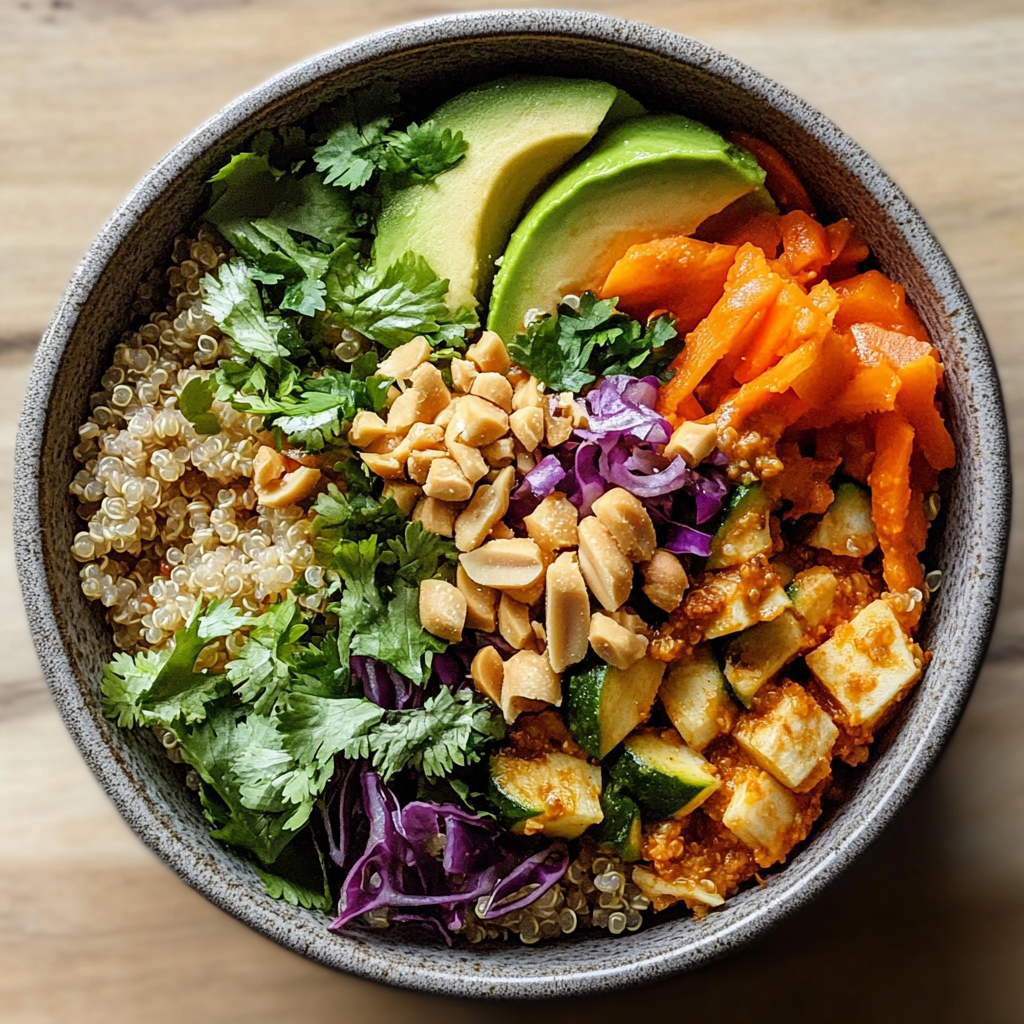
The Thai Peanut Quinoa Bowl is a modern fusion dish that marries the protein-rich versatility of quinoa with the bold, umami-laden flavors of Thai street food. This bowl combines steamed quinoa as its base, topped with vibrant raw vegetables and a house-made peanut sauce that delivers the perfect balance of sweet, spicy, and tangy. Inspired by Southeast Asian street food vendors and modern health-conscious dining trends, the dish offers a complete meal in one satisfying bowl. The crunch of julienned carrots, the herbal brightness of fresh cilantro, and the creamy texture of the peanut sauce create a sensory experience that’s both indulgent and nourishing.
What makes this recipe unique is its versatility—you can customize it with seasonal produce or add grilled tofu, chicken, or shrimp for extra protein. The quinoa base provides a nutty, chewy texture that soaks up the peanut sauce beautifully, while the edamame adds a pop of umami and a touch of sweetness. This dish isn’t just a recipe—it’s a conversation between global flavors and mindful eating.
Reasons to Try Thai Peanut Quinoa Bowl
This bowl is the Swiss Army knife of healthy meals. It takes just 30 minutes to assemble, feeds four as a side or two as a main, and keeps well for up to three days—perfect for busy weekdays or weekend meal prep. Unlike traditional quinoa bowls that can feel bland or underseasoned, this one delivers an explosion of flavor that rivals takeout without the guilt. The peanut sauce has a velvety richness that elevates humble ingredients into something bordering on gourmet, while the crunch and color of the vegetables make it feel fresh and celebratory.
Busy parents will love how it keeps kids satiated for hours, gym enthusiasts will appreciate the high-protein content, and foodies will geek out over the flavor profiles. It’s a recipe that works equally well for a lazy Sunday lunch or a dinner party—they’ll think you spent all day crafting it, when in reality you had it on the table in 20 minutes.
Ingredients Needed to Make Thai Peanut Quinoa Bowl
1 cup uncooked quinoa
2 cups water or vegetable broth (low-sodium preferred)
1 cup shredded red cabbage (pre-shredded or half a small head)
1 cup shredded carrots (do this on the julienne disk if you have one)
1 cup thinly sliced cucumber (English cucumber works best)
1 red bell pepper, thinly sliced (stem removed and seeds scraped)
1 cup shelled edamame (fresh or frozen, steamed for 3-4 minutes)
2 green onions, sliced (white and green parts separated for garnish)
¼ cup chopped fresh cilantro (reserve some whole leaves for garnish)
¼ cup chopped roasted peanuts (use crushed skins for texture)
Thai Peanut Sauce:
½ cup creamy peanut butter (natural without additives)
2 tablespoons soy sauce or tamari (gluten-free if needed)
1 tablespoon sesame oil (toasted variety is best)
2 tablespoons fresh lime juice (about half a lime)
1 tablespoon honey or maple syrup (adjust to taste)
1 teaspoon freshly grated ginger (zested directly into sauce)
1 clove garlic, minced (or ½ teaspoon jarred)
2-4 tablespoons warm water (as needed for consistency)
Optional: ½ teaspoon chili garlic sauce or sriracha for heat
Instructions to Make Thai Peanut Quinoa Bowl – Step by Step
Step 1: Start by prepping the vegetables while the quinoa cooks. Slice the red onion’s white bulb first, then thinly sliver the green tops separately. Use a mandoline for even cabbage shreds—just 1 cup is plenty here. Julienne the carrots first, then skip the thick core of the red bell pepper (it’s bitter) and slice the outer flesh into matchsticks. For the cucumber, English varieties are less watery so the slices hold up better. Lay the cut vegetables out on a plate in sections to avoid wilting—the cleaner they are, the crisper they’ll stay in the bowl.
Step 2: Rinse the quinoa thoroughly—this is crucial to remove its natural saponins. Use a fine-mesh strainer and cold water, swirling gently for 2-3 minutes until the water runs clear. Add the rinsed quinoa and 2 cups water or broth to a small saucepan. Bring to a boil, then immediately reduce to a simmer. Cover and cook for 12 minutes (quinoa tends to undercook for most home chefs). After cooking time, turn off the heat and let it steam, covered, for 5 minutes. Fluff with a fork and transfer to a large mixing bowl. Use a dry fork—it’s crucial you let the quinoa rest, or you’ll end up with clumps that break apart when stirred.
Step 3: While the quinoa rests, make the peanut sauce. In a medium stainless steel bowl, whisk together the peanut butter until smooth. Add the soy sauce, sesame oil, lime juice, honey, and garlic. Start combining the water, adding one tablespoon at a time—after each addition, whisk slowly in one direction. The sauce should become pourable but still coat the back of a spoon. Test the consistency by holding your finger through it on the spoon’s surface; if it takes 3-4 seconds to fill in the gap, it’s right. Add the ginger and chili sauce now (if using) for the final flavor boost. Taste and adjust sweet/salt/spicy balance before moving on—this is your chance to personalize it to your palate!
Step 4: To assemble, divide the cooked quinoa between two large bowls (or four smaller ones). Mound the cabbage on one side and tuck the carrots and bell pepper strips on the opposite. Scatter the cucumber slices like confetti in the center, then add edamame on top. Drizzle the peanut sauce using a spoon or small measuring cup for even coverage—don’t skimp on this step. The sauce is everything. Finish with toasted green onions, cilantro, and peanuts. I like to crush a small handful of the raw peanuts with my fingers before garnishing for extra nuttiness. Just before serving, squeeze a wedge of lime over the top for that final tangy punch.
Chef’s Tips for a Perfect Result
- Toast your quinoa in a dry skillet for 2 minutes before adding liquid—this enhances nuttiness and makes the grains firmer
- Make the sauce up to 8 hours ahead and refrigerate—let it sit at room temp 15-20 minutes before drizzling for better emulsification
- Use a microplane to zest fresh ginger directly into the sauce—this avoids specks and ensures full flavor extraction
- For a spicier version, blend red pepper flakes into the peanut butter base first
- Swap cucumber for zucchini ribbons: thinner zucchini slices hold sauce better and add a slight bitterness to balance sweetness
- Keep garnishes separate for meal prep: whole cilantro leaves and slivered raw peanuts maintain freshness in storage
Variations and Substitutions
Vegan Option
- Swap honey for 1 tablespoon maple syrup + ½ teaspoon apple cider vinegar for tang
- Use tamari instead of soy sauce for gluten-free
- Add ½ avocado slices as a final garnish for creamy richness
Protein Upgrade
- Top with seared chicken strips (marinated in soy sauce and ginger) cooked in olive oil
- Substitute edamame with tofu: press 15 minutes, then cube and sauté in tamari + sesame oil for 4 minutes
- Add crushed edamame over the base for extra texture and protein
Low-Carb Version
- Replace quinoa with shredded cabbage base (3 cups) for higher volume/fiber
- Omit edamame and replace with cucumbers: double for water content
- Use xylitol or monk fruit sweetener instead of honey
Budget Swap
- Use canned crushed pineapple instead of edamame—drain and pat dry first
- Opt for shelf-stable peanut butter (cheaper than natural) and add 1 tsp lecithin for smoother sauce
- Substitute red bell pepper with red onion slices + cherry tomatoes for visual appeal
How to Serve and Pair
Serve this bowl straight out of the recipe’s calligraphy bowls for maximum visual impact. For a restaurant-style presentation, use a flat white plate and arrange the ingredients in a circular pattern with a dollop of sauce in the center. This dish pairs surprisingly well with Thai iced tea (sweet and floral) or a crisp Sapporo lager (if you want to drink it!). For non-alcohol, a iced green tea with mint synergizes beautifully with the flavors.
When serving as part of a meal, add a side of jasmine rice or spring rolls for a complete carbohydrate boost. At dinner parties, plate them under LED-lit food lamps to highlight colors—trust me, guests will take photos of their trench dip!
Storage and Reheating
Refrigerator
Store components in airtight containers for up to 2 days. Keep the peanut sauce separate (it thickens in the fridge) and rewarm gently in a pot before drizzling over the ingredients. The quinoa will absorb most of the sauce during storage, so drizzle fresh sauce on top before serving.
Freezer
Freeze uncooked quinoa and sauce separately for up to 3 months. Thaw the items in the fridge overnight and reheat the sauce on low heat, adding 1-2 tsp water for desired consistency. Avoid freezing the raw vegetables—they become soggy after thawing.
Reheating
Best reheated at room temperature or in the oven: spread the components on a baking sheet and warm at 300°F for 5 minutes. Microwave option: heat in 30-second bursts and add a splash of water to prevent the sauce from over-thickening. Always reheat the quinoa and sauce first—raw veggies need to stay crisp.
Nutritional Values
- Calories: 460 per serving
- Protein: 18g
- Carbohydrates: 45g
- Fat: 24g
- Fiber: 7g
Approximate values.
Frequently Asked Questions
Can I use crunchy peanut butter in the sauce?
Absolutely, but processing it with a high-speed blender first will eliminate chunks that can clog your throat when eaten raw. If you prefer texture, add crushed peanuts as a garnish instead.
How do I know the quinoa is done cooking?
At 12 minutes, you’ll see a light halo around each grain. Wait the full 5 minutes after removing from heat—premature fluffing will compact the grains and make them gummy.
Why does my sauce separate after refrigeration?
Oils solidify in the fridge. Let the sauce come to room temperature first, then whisk in warm water for 10-15 seconds to reemulsify before drizzling.
Can I make this the night before?
Yes, but store vegetables in cold water in the fridge until ready to assemble. The sauce keeps best when chilled, not at room temp, for more than 4 hours ahead.
What’s the best way to customize for a large gathering?
Use 1 fat butternut squash (peeled, cubed, steamed) as the base instead of quinoa. Add 2 cans of coconut milk for extra creaminess and rework the peanut sauce into a paste for dipping.
Conclusion
This Thai Peanut Quinoa Bowl is where global flavors meet kitchen pragmatism—crunchy textures, bold sauces, and a canvas ready for customization. Whether rushed or REI-style prepped for camping, it delivers big on flavor and nutrition without asking much from your time. Once you taste that first swig of peanut sauce-cut cabbage, you’ll understand why this dish has become my go-to for balancing Friday pizza nights with Monday evil-beast workouts. Let the sizzling wok of your imagination take the lead—this recipe rewards bold tweaks and creative garnishes.
PrintThai Peanut Quinoa Bowl
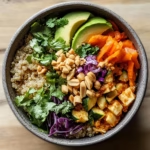
A vibrant blend of quinoa, fresh vegetables, and a zesty peanut sauce. Customize with grilled tofu or shrimp for extra protein. This quick, nutrient-rich dish delivers Thai-inspired flavor in a satisfying, healthful bowl.
- Prep Time: 15
- Cook Time: 15
- Total Time: 30
- Yield: 4 servings
- Category: Dinner
- Method: Stirring and Steaming
- Cuisine: Thai
- Diet: Vegetarian
Ingredients
1 cup uncooked quinoa
2 cups water or low-sodium vegetable broth
1 cup shredded red cabbage
1 cup shredded carrots
1 cup thinly sliced cucumber
1 red bell pepper, thinly sliced
1 cup shelled edamame
2 green onions, sliced
1/4 cup chopped fresh cilantro
1/4 cup chopped roasted peanuts
1/2 cup creamy peanut butter
2 tablespoons soy sauce or tamari
1 tablespoon rice vinegar
1 tablespoon honey
2 cloves garlic, minced
2 teaspoons red pepper flakes
1 tablespoon sesame oil
Instructions
Rinse quinoa under cold water
Cook quinoa with 2 cups water or broth in a pot over medium heat for 15 minutes
Steam edamame for 3-4 minutes
Chop cabbage, carrots, cucumber, red bell pepper, green onions, and cilantro fresh
Whisk together peanut butter, soy sauce, rice vinegar, honey, minced garlic, red pepper flakes, and sesame oil in a bowl
Assemble bowls by layering cooked quinoa, steamed edamame, and raw vegetables
Pour peanut sauce over the top and garnish with sliced green onions and extra cilantro
Notes
Use vegetable broth for a richer base
Toast quinoa before cooking for deeper flavor
Substitute red cabbage with kale or spinach if unavailable
Store in the refrigerator for up to 3 days
Add grilled tofu, shrimp, or chicken for protein variations