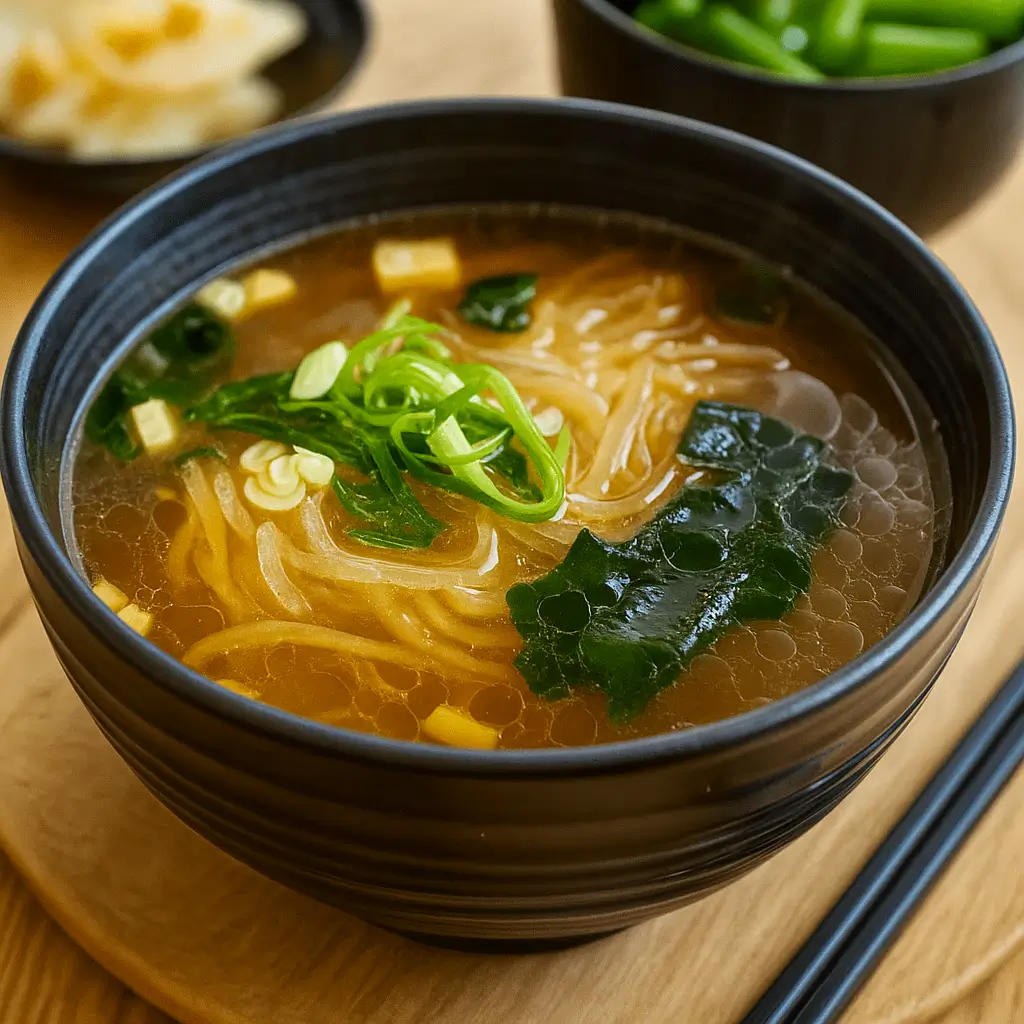
Japanese Glass Noodle Soup is that cozy bowl you didn’t know you were craving until now. Light yet flavorful, this slurp-worthy soup brings the comforting vibes of a hearty broth, bouncy noodles, and tender veggies straight to your kitchen in just 30 minutes. Whether you’re trying to sneak in more veggies, want something light for dinner, or just love an excuse to use chopsticks and a spoon at the same time—this one’s a winner.
It’s also a fantastic meal for when you’re feeling run down or just need something warming without diving into anything too rich or heavy. Somewhere between soothing and satisfying, this Japanese Glass Noodle Soup hits the spot for busy weeknights, light lunches, or a make-ahead meal that doesn’t taste like leftovers.
Table of Contents
What is Japanese Glass Noodle Soup?
Japanese Glass Noodle Soup is a clear, savory broth-based soup made with translucent glass noodles (often called harusame), tender vegetables, and a mix of umami-rich ingredients like soy sauce, ginger, and mirin. Unlike heavier noodle soups like ramen or udon, this dish is light, hydrating, and perfect for those who want something comforting but not greasy.
The beauty of this soup lies in its simplicity—you’re looking at a handful of everyday ingredients that come together with minimal effort but maximum payoff. Think of it as Japan’s answer to chicken noodle soup but with a little more flair and a whole lot of soothing depth.
Reasons to Try Japanese Glass Noodle Soup
Let’s be honest—sometimes you just need dinner to be easy, nourishing, and not require 16 pots. Japanese Glass Noodle Soup checks all those boxes. First, it’s incredibly quick—you’ll have it steaming on the table in under 30 minutes. It’s naturally gluten-free if you use tamari and perfect for meatless Mondays or anyone on a lighter-eating kick. It’s also a sneaky way to use up those veggies wilting in the crisper.
Got half a carrot? Toss it in. Some spinach or baby bok choy? Perfect. It’s a no-stress, low-waste recipe that still feels like a warm hug. Bonus: kids will love the fun texture of glass noodles—and you might even convince picky eaters to try mushrooms (no promises, but still).
Ingredients Needed to Make Japanese Glass Noodle Soup
For the Soup Base:
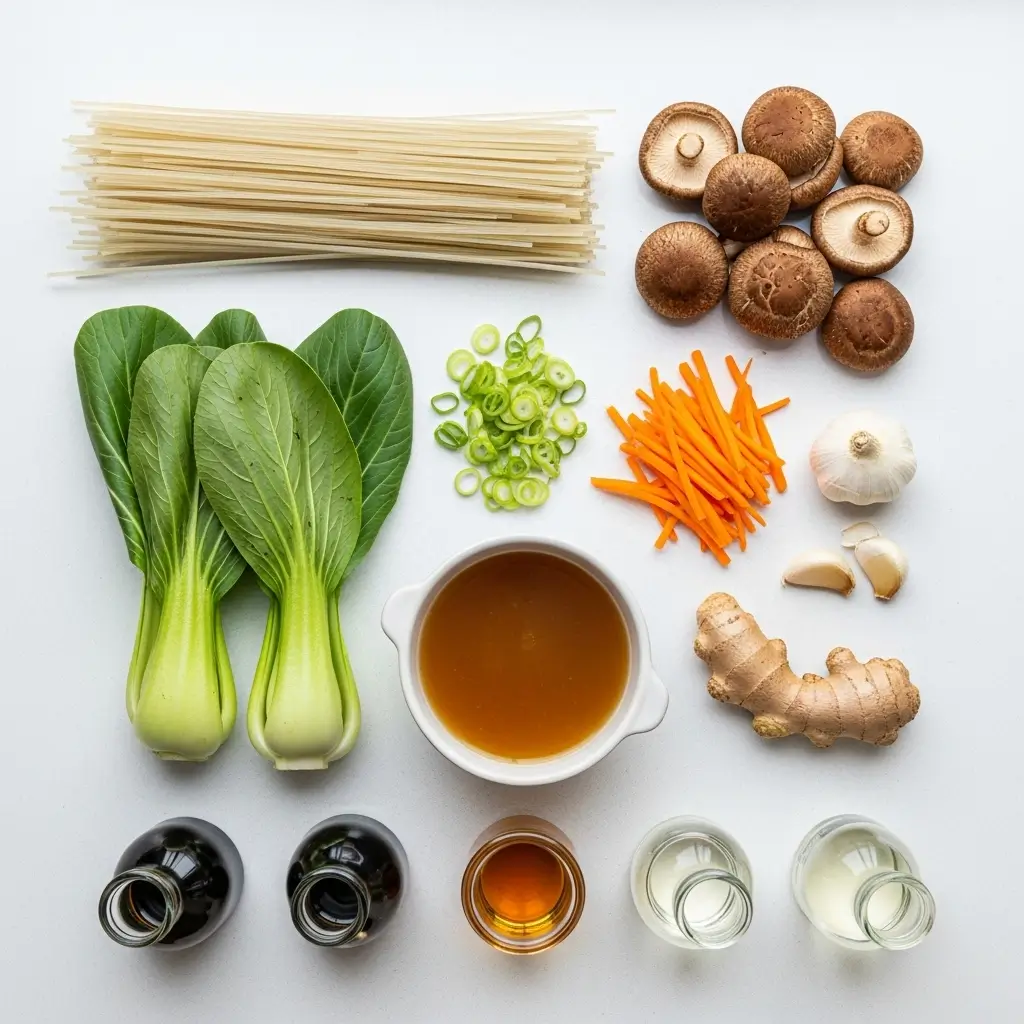
- 4 cups vegetable or chicken broth
- 2 tablespoons soy sauce
- 1 tablespoon mirin
- 1 tablespoon rice vinegar
- 1 teaspoon sesame oil
- 1–2 teaspoons grated ginger
- 1 garlic clove, minced
For the Noodles and Vegetables:
- 100g glass noodles (harusame)
- 1 small carrot, julienned
- ½ cup shiitake mushrooms, sliced
- ½ cup bok choy or spinach, chopped
- ¼ cup scallions, chopped
- ¼ cup baby corn (optional)
Optional Garnishes:
- Fresh cilantro or parsley
- Sesame seeds
- Sliced chili (optional)
Instructions to Make Japanese Glass Noodle Soup
Making Japanese Glass Noodle Soup is easier than you think, and this step by step guide will walk you through the entire process like we’re cooking side-by-side. Whether you’re a soup newbie or just need a refresh, this is your go-to plan for a light, cozy meal you can whip up in 30 minutes. Let’s dive in—apron on!
Step 1: Build the Flavorful Broth Base
Start by grabbing a medium-sized pot. Pour in 4 cups of either vegetable or chicken broth—whichever fits your vibe. Bring it to a gentle simmer over medium heat.
Now, here’s where the magic happens. Add:
- 2 tablespoons of soy sauce
- 1 tablespoon of mirin (that slightly sweet rice wine that adds depth)
- 1 tablespoon of rice vinegar for brightness
- 1 teaspoon of sesame oil for a toasty finish
- 1–2 teaspoons of freshly grated ginger
- 1 garlic clove, finely minced
Stir well and let it simmer for 5 minutes. This gives the aromatics time to release their flavor into the broth. It should already start to smell amazing—kind of like the broth you wish came in every instant noodle packet.
Tip: If you’ve never used mirin before, check out our Ingredient Substitutions Guide for quick swaps (like a splash of sweet white wine + sugar).
Step 2: Soften the Glass Noodles
While the broth does its thing, prep the noodles. Place 100g of glass noodles in a heat-safe bowl and cover with hot water—just off a boil works best. Let them soak for about 5 to 7 minutes until they’re soft and see-through. Then, drain and set them aside.
You don’t want to boil them directly in the broth because they can get mushy fast. Soaking helps control their texture—springy and perfect.
Want more noodle inspiration? Try our Chicken with Buttered Noodles for a cozy carb fix.
Step 3: Prep the Veggies Like a Pro
While the noodles are soaking, take a few minutes to prep the veggies:
- Julienne 1 small carrot (think matchsticks)
- Slice ½ cup of shiitake mushrooms
- Chop ½ cup of bok choy or spinach
- Slice ¼ cup scallions
- Optional: Add ¼ cup baby corn for crunch and color
This dish is super flexible, so use what you’ve got. Leftover kale? Toss it in. Don’t like mushrooms? Skip ’em.
For more clever ways to save prep time, see our Southern Green Bean Casserole which shares tips on efficient veggie prep.
Step 4: Cook the Vegetables in the Broth
Now that your broth is flavorful and gently simmering, add the sliced carrots, shiitake mushrooms, and baby corn (if you’re using it). Let them cook for 3 to 4 minutes. You’re looking for tender but not limp—kind of like a spa day for your vegetables.
Then, stir in the bok choy or spinach and cook for another 1 to 2 minutes. You want the greens wilted, but still bright and fresh.
Pro Tip: If using spinach, toss it in last. It wilts in seconds and doesn’t need much time at all.
Step 5: Add the Noodles to the Broth
Time to bring everything together. Add the soaked and drained glass noodles to the pot and gently stir. Let them simmer with the veggies and broth for another 2 to 3 minutes. This allows the noodles to warm through and soak up all that savory, umami-packed flavor.
It’s at this point that your kitchen will start smelling like your favorite Japanese noodle spot—without the takeout bill.
Looking for a bolder flavor variation? Check out our Spicy Korean Ramen with Grilled Beef for a broth that kicks it up a notch.
Step 6: Garnish and Serve Hot
Ladle the soup into individual bowls and top with your favorite garnishes:
- Sliced scallions
- Fresh cilantro or parsley
- Sesame seeds
- Sliced chili for a spicy finish (optional but amazing)
Serve hot and enjoy the cozy simplicity. This soup is best eaten fresh, but trust me—it’s great reheated too (see our reheating tips below).
Bonus: For a full comfort-food night, pair this with our Chili Mac Casserole—your family won’t complain.
What to Serve with Japanese Glass Noodle Soup
This Japanese Glass Noodle Soup is a standalone rock star, but if you’re in the mood for a fuller spread, it plays well with others. A side of steamed edamame or a light cucumber salad adds crunch and balance. You could pair it with crispy gyoza or veggie spring rolls for a cozy takeout-style dinner at home. Got some leftover rice? Add a scoop to your bowl and turn it into a slightly heartier one-bowl meal. And if you’re feeling wild, why not add a poached egg on top? It gives it a creamy finish that’s totally irresistible.
Key Tips for Making Japanese Glass Noodle Soup
- Don’t overcook the noodles: Glass noodles go from perfect to mush fast. Soaking them first keeps them springy and not too soft.
- Go low-sodium if you’re sensitive: Use low-sodium broth and adjust the soy sauce to taste.
- Ginger matters: Use fresh ginger for that warm, zippy flavor. Powdered just won’t cut it here.
- Add protein if you want: Silken tofu, shredded chicken, or even a soft-boiled egg are great add-ins.
- Make it spicy: A drizzle of chili oil or sriracha at the end is totally fair game if you like a kick.
Storage and Reheating Tips for Japanese Glass Noodle Soup
Let the soup cool completely before storing. Pour it into an airtight container and refrigerate for up to 3 days. The noodles will continue to absorb broth, so they might be softer the next day—but still tasty. If you’re meal-prepping, store the broth and noodles separately to keep that perfect texture. To reheat, warm it gently on the stovetop or in the microwave. Add a splash of broth or water if it’s looking a bit thick. Garnish fresh just before serving to bring back that just-cooked freshness.
FAQs
Can I make this ahead of time?
Absolutely. Just store the noodles and broth separately if you want to avoid mushy noodles.
Are glass noodles gluten-free?
Yes! Most glass noodles are made from mung bean or potato starch, making them naturally gluten-free. Always check the label just in case.
What if I don’t have mirin?
You can sub with a splash of sweet white wine or a mix of rice vinegar and a pinch of sugar.
Can I add meat to this?
Totally. Thinly sliced chicken, beef, or even shrimp cook up quickly and work great here.
Final Thoughts
Japanese Glass Noodle Soup is the kind of meal that feels like a deep breath at the end of a chaotic day. It’s quick, light, flexible, and—let’s face it—kind of beautiful in the bowl. Whether you’re feeding your family or treating yourself, this soup brings warmth, comfort, and flavor without making your kitchen look like a tornado hit. Want more cozy meals like this? Check out our Hearty Baked Italian Vegetable Lasagna or the crave-worthy Easy Bang Bang Chicken. You’ve got options, friend.
Visit our Pinterest for regular slow cooker recipe updates, or join our Facebook discussions where cooking fans exchange their favorite hearty meal ideas.
PrintJapanese Glass Noodle Soup – Light, Flavorful, and Fast

Japanese Glass Noodle Soup is a light, aromatic, and deeply comforting dish featuring soft glass noodles, fresh vegetables, and an umami-rich broth. It’s a quick and healthy recipe perfect for lunch or dinner.
- Prep Time: 10 minutes
- Cook Time: 20 minutes
- Total Time: 30 minutes
- Yield: 4 servings
- Category: Soup
- Method: Stovetop
- Cuisine: Japanese
- Diet: Vegetarian
Ingredients
- 4 cups vegetable or chicken broth
- 2 tablespoons soy sauce
- 1 tablespoon mirin
- 1 tablespoon rice vinegar
- 1 teaspoon sesame oil
- 1–2 teaspoons grated ginger
- 1 garlic clove, minced
- 100g glass noodles (harusame)
- 1 small carrot, julienned
- 1/2 cup shiitake mushrooms, sliced
- 1/2 cup bok choy or spinach, chopped
- 1/4 cup scallions, chopped
- 1/4 cup baby corn (optional)
- Optional garnishes:
- Fresh cilantro or parsley
- Sesame seeds
- Sliced chili (optional)
Instructions
1. In a medium pot, bring the vegetable or chicken broth to a simmer over medium heat.
2. Stir in soy sauce, mirin, rice vinegar, sesame oil, grated ginger, and minced garlic. Let the mixture simmer for 5 minutes to develop flavor.
3. While the broth simmers, soak glass noodles in a bowl of hot water for 5–7 minutes or until softened. Drain and set aside.
4. Prepare the vegetables: julienne the carrot, slice the mushrooms, chop the bok choy or spinach, and slice the scallions.
5. Add carrots, mushrooms, and baby corn (if using) to the simmering broth. Cook for 3–4 minutes until vegetables are tender.
6. Stir in the bok choy or spinach and cook for 1–2 more minutes until wilted.
7. Add the soaked glass noodles to the pot and simmer for another 2–3 minutes to heat through.
8. Ladle the soup into bowls and garnish with chopped scallions, fresh cilantro, sesame seeds, and sliced chili if desired.
9. Serve hot and enjoy.
Notes
For a vegetarian version, use vegetable broth and omit optional toppings like egg or fish sauce.
Glass noodles absorb flavor quickly, so avoid overcooking once added.
Leftover soup can be stored in the fridge for up to 2 days, though noodles may soften further.
Add tofu or shredded chicken for extra protein if desired.