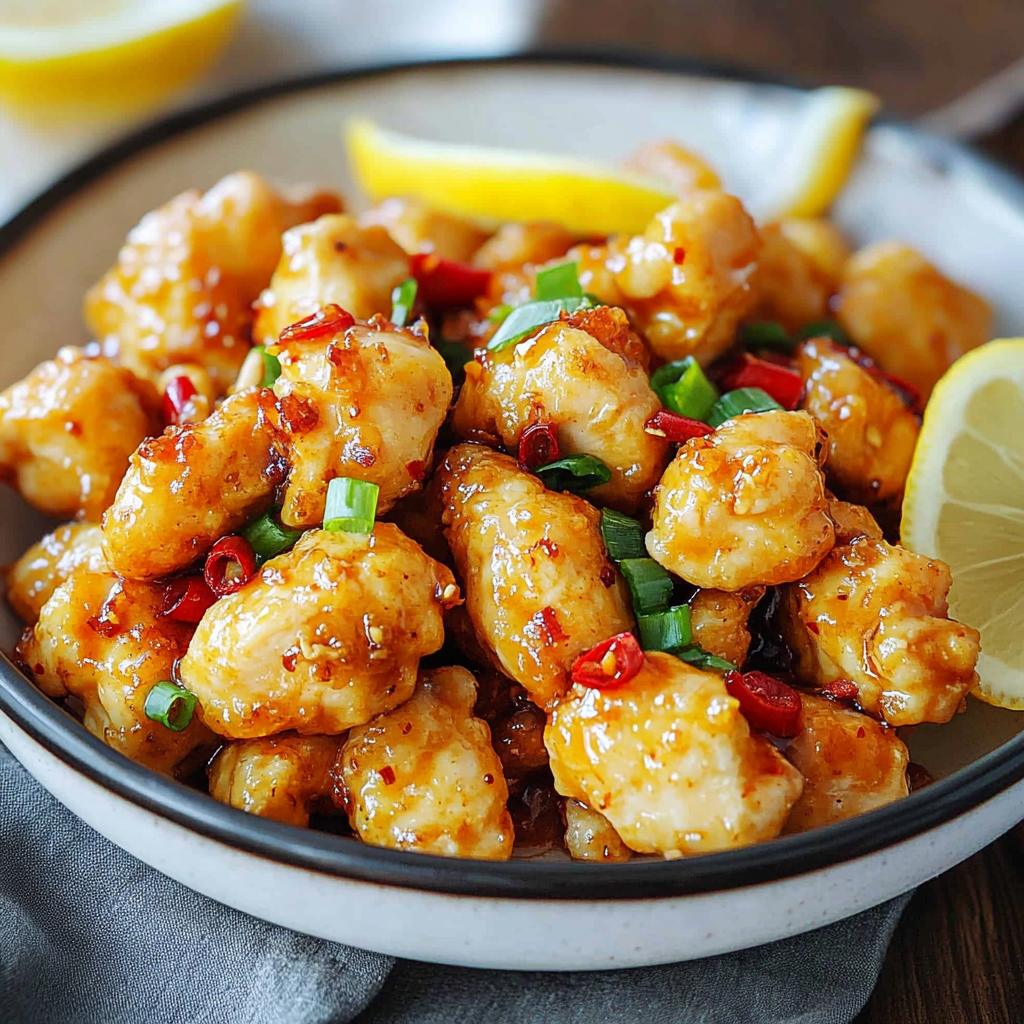
Chinese Lemon Chicken is the kind of dish that transports diners straight to a bustling Beijing eatery or a home kitchen in Shanghai. The first time I tried it—fresh from a sizzling wok paired with fragrant jasmine rice—it felt like a revelation. Unlike its Americanized cousins, this vibrant recipe balances bold citrus brightness with rich umami and a whisper of heat, creating a harmony that’s impossible to forget. Today, it’s a global favorite, blending traditional Chinese techniques with the zesty punch of lemon to craft something entirely craveable. Whether you’re a longtime fan or a curious first-timer, this guide will empower you to master the dish in your own kitchen—with results that outshine even the best takeout.
At its heart, Chinese Lemon Chicken is a celebration of contrasts. Crispy, golden-brown chicken pieces get tossed in a tangy, glossy sauce made from fresh lemons, soy, and a hint of pepper. The secret lies in the sauce’s perfect balance: sweet to tame the acidity, salty to deepen the flavor, and just enough kick to awaken the senses. You’ll find it’s a staple in Chinese-American cuisine but one with deep roots in traditional stir-fry and deep-fried techniques. With this recipe, you might even find yourself humming old takeout jingles as you fry, stir, and savor your way through the process.
What is Chinese Lemon Chicken?
Chinese Lemon Chicken is a vibrant dish where crispy, golden-brown chicken meets a tangy, aromatic lemon-based sauce, typically served with steamed rice. Despite its modern culinary labeling, the dish has roots in street food culture from Sichuan and Hunan, where stir-frying and deep-frying were used to lock in flavor and texture. The version popularized in the U.S. adds a zesty twist, incorporating fresh lemons (a nod to Cantonese influences) and a mix of sweet, salty, and spicy flavors. The combination of cornstarch, soy sauce, and double-fried chicken creates a textbook example of how technique and balance can transform simple ingredients into something iconic.
What sets this dish apart is its versatility. The lemon sauce—thickened with cornstarch and glistening with zest—is adaptable enough to pair with seafood or tofu but uniquely shines when swirled with tender chicken. The ingredients list is deceptively simple: chicken, eggs, flour, and a medley of spices and citrus. Yet the alchemy in the pan? That’s where magic happens—the crackle of the fried chicken, the sizzle of the glaze, and the way the lemon oil scents the kitchen by the time it’s ready to serve.
Reasons to Try Chinese Lemon Chicken
This isn’t just another ’80s-style American-Chinese export—it’s a blank canvas for creativity and a stress-free solution for busy weeknights. First, the flavor profile is built to satisfy cravings for both comfort and complexity. The tangy pop of lemon cuts through the richness of the soy-sweetasted sauce, while the spicy undertones keep things exciting. It’s a flavor tour that leads from Sichuan to Canton to your own kitchen.
Second, it’s suspiciously easy to make. With a prep time of just 15 minutes and a total of 35 minutes from start to finish, this dish slots perfectly into a family dinner routine. No need for sous chefs (unless you want to juice lemons—shout-out to my kids’ preemptive squeeze-fest moments). The step-by-step process smooths out beginner stumbles, and the forgiving nature of the sauce means minor mistakes (like over-frying the chicken) can be easily masked with a quick stir.
Finally, it’s a master of disguise. Whether you want comfort food basics (steamed rice, a sprinkle of green onion) or an elevated presentation (serve it on a bed of crushed garlic and cilantro), this dish elevates any table. Bonus: The lemon glaze keeps for days, so you’re never stuck with leftover chicken that goes bad before Monday’s packed lunch is ready.
Ingredients Needed to Make Chinese Lemon Chicken
- 4 boneless, skinless chicken breasts (cut into bite-size pieces)
- 3 large eggs (whisked to a frothy head)
- 1/3 cup cornstarch (this keeps the coating light and crackly)
- 1/3 cup all-purpose flour (your structural backbone)
- Salt (for flavor, not just impressing your taste buds)
- 1 cup freshly squeezed lemon juice (squeeze by hand for maximum zing)
- 2/3 cup granulated sugar (the sweetness counterbalancing lemon)
- 1 tablespoon rice vinegar (a tangy surprise in the sauce)
- 2 tablespoons soy sauce (the umami hero in this drama)
- 1/4 teaspoon ginger powder (ground fresh is king, but pre-made still sings)
- 1/4 teaspoon garlic powder (give it a swirl of sautéed garlic if your pantry’s feeling fancy)
- 1/2 teaspoon red pepper flakes (or to taste—let the heat be your guide)
- 1 lemon zest (the aromatic finale)
- 1 tablespoon cornstarch (for sauce scholarship: toss it with 2 Tbsp water first before adding to the pot)
Instructions to Make Chinese Lemon Chicken – Step by Step
Step 1: Begin with the sauce, because it will take a bit more time to simmer. In a non-reactive pot, pour in the lemon juice, sugar, vinegar, soy sauce, ginger, garlic, and red pepper flakes. Turn the burner to medium and whisper, “Let’s get this golden.” Stir everything together and let it warm for exactly 3 minutes—no more, no less. Watch for the mixture to become warm and syrupy, with small bubbles kissing the surface. This low-and-slow start is where the flavors begin their slow dance.
Step 2: Now, it’s time to thicken things up. In a small bowl, whisk the cornstarch (that 1 tablespoon) with 2 tablespoons of water until it becomes a thin, milky paste (minimize lumps or you’ll regret it later). Slowly pour this slurry into the pot, whisking the entire time to keep the motor running. Increase the heat slightly and let the sauce bubble and thicken for 5 minutes. Your kitchen will smell like a citrus grove simmered over a campfire by now—that’s the good stuff. Once it’s thick and glossy, remove it from the heat and stir in that precious lemon zest. Set it aside, letting it cool slightly while you tackle the chicken.
Step 3: For the chicken, create your coating station. In a shallow dish (think pie tin or Pyrex), mix the flour and cornstarch, then add a healthy pinch of salt. This combination is your chicken’s armor—it’ll fry up crispier than anything your local takeout has to offer. In another dish, whisk the eggs until they’re thick and foamy, ready to soak up the flour on each bite.
Step 4: Take the chicken pieces and dive in: coat each piece first in the egg mixture—shake off the excess like it’s glitter—then roll it in the flour cornstarch blend until fully covered. It should look like a triple-layered comet, glowing with potential. Hold the piece at arm’s length and admire how perfectly it’s prepped for the frying stage.
Step 5: Heat 2 to 3 inches of oil in a heavy-bottomed pot or Dutch oven until it reaches 350°F. Watch the oil closely—this is your alchemy moment. The chicken needs to be fried at the right temperature to achieve that perfect golden crust without absorbing unnecessary oil. Using tongs or two pairs of chopsticks to flip, place the chicken into the oil in batches (stacking is a path to sogginess). Fry each bite for 2 to 3 minutes, turning often to avoid that one overdone side or the familiar oil-fire incident from my last recipe trial.
Step 6: Once golden brown and fully cooked, use a slotted spoon to lift the chicken onto a paper-towel-lined plate. Here’s where the oil drains, and the residual heat keeps the chicken from losing its crispiness. Repeat this process with the rest of your chicken batch, minds you don’t overcrowd the pot. Time to build that perfect balance of tender meat and crispy shell.
Step 7: Finally, bring all your elements together. Toss the fried chicken in that finished layer of lemon sauce until each piece is glistening with every drop. You’ll notice the sauce clings slightly like a secret held on tight. If you’re planning to serve the chicken over rice (as it often should be), consider doubling the sauce, as the rice soaks up enough to leave you wondering if you’ve missed something. Plate it with a flourish, or just throw it into the ground-floor simplicity of a tired workday—either way, your taste buds have earned a standing ovation.
Chef’s Tips for a Perfect Result
- Thicken it up right: Always temper the cornstarch slurry in cold water before mixing into the hot sauce. It helps prevent clumping and ensures a smooth finish.
- Use room-temperature chicken: Bring the chicken to room temperature before frying. This lets it cook through evenly and develop a consistent crust.
- Don’t overcook the chicken: Fry quickly but attentively. The key is to get a golden shell without drying out the meat.
- Keep it light: Don’t retrieve all the oil from your dish after frying. A tiny bit of oil helps the sauce adhere better to the chicken.
Variations and Substitutions
- Allergen-Free Option: For a gluten-free version, swap the regular cornstarch with arrowroot or tapioca starch and use tamari instead of soy sauce.
- Vegan Alternative: Use a block of firm tofu, cut into cubes, and toss in the flour and cornstarch mixture before frying, or swap out the chicken for a macaroni pasta or quinoa starch.
- High-Protein Break: Want leaner chicken? Opt for grilled instead of fried. Just sear it in a dry skillet for 7 minutes per side without breading; though the tanginess may have to overtake the crisped texture.
- Lazy Version: Short on time? Skip the egg and breading process and simply dredge the chicken in cornstarch, then sauté in oil until golden. You lose the “egg armor,” but you gain time and a more neutral texture.
How to Serve and Pair
Chinese Lemon Chicken stands up well to a side of steamed jasmine rice and sautéed broccoli or bean sprouts. You can also double the sauce for drizzling over rice, adding an instant twist on traditional fried rice. For presentation, extra flourishes like a sprinkle of green onion or a scattering of freshly sliced lemon wheels could elevate freshness and aesthetics dramatically.
Pair this dish with a chilled chardonnay or a slightly sweet riesling to balance out the lemon pop. For casual meals, a light IPA or even a sparking mojito can complement its brightness. For an Asian-inspired twist, serve it with tamari-based slaw and match it with a light kombucha or iced green tea.
Storage and Reheating
Fridge: Store leftovers in an airtight container, separated from rice if you have it. The chicken will remain fresh for 3–4 days. Sauce tends to congeal, so stir or reheat with a splash to loosen it again.
Freezer: Freeze the chicken and sauce together or separately in airtight, zip-top bags or containers. It should last 2–3 months. Let it thaw completely in the fridge before reheating.
Room Temperature: Leftovers can sit safely for up to 2 hours—a perfect time to warm up QC-ready dinner or snack.
Reheating Option:
Use the oven for best results: Spread your leftover chicken and sauce on a parchment-lined baking sheet and bake at 350°F for 10–15 minutes. If it feels dry post-warm-up, gently reheat a bit of the remaining sauce to drench it fresh in flavor once again—nothing brings back a dish like a little extra lemon oil drizzle.
Nutritional Values
Per serving (serves 4):
- Calories: 500
- Protein: 40g
- Carbohydrates: 32g
- Fat: 22g
- Fiber: 1g
Approximate values.
Frequently Asked Questions
Q1: Can I use tamari instead of soy sauce?
Absolutely! For a gluten-free option, tamari is an excellent substitute. Just make sure it’s labeled “no added wheat” for clarity.
Q2: How do I know when the chicken is done?
Look for golden-brown color and consistent crispiness on all sides. To verify, cut a piece open—there should be no pink meat, and the chicken should feel firm yet moist. An instant-read thermometer should hit 165°F in the thickest part.
Q3: Why does my sauce become runny or clumpy?
Runny sauce usually means you didn’t cook it enough. Let it simmer for an additional minute or two. Clumpy sauce? That’s likely due to improper mixing or cornstarch not being properly dissolved—this is where whisking comes in handy.
Q4: Can I make the batter and sauce ahead of time?
You can make the chicken breading and the sauce a day in advance. Store the breading in an airtight container, and keep the sauce in the fridge. When ready to fry, simply prep the chicken and store until heat is ready. The sauce might thin slightly when stored, but a quick reheat and a swirl of oil will revive it.
Q5: What’s the best way to customize the dish?
Customize ingredients accordingly to suit dietary needs or flavor preferences. Try adding sesame seeds for a nutty crunch or a sprinkle of chili flakes for heat. You could also experiment with adding fresh herbs like cilantro or thyme for extra depth.
Conclusion
Chinese Lemon Chicken is a dish with bold flavor that brings together crispy textures and tangy richness. Whether you’re preparing it as a quick weeknight meal or hosting guests, this recipe guarantees impressive results with minimal effort. The unmistakable pop of lemon, paired with the sweetness of the sauce and the subtle heat, is what makes it a standout and sure to win your taste buds over. Think of it as lemonade but with deep-fried chicken—no sunscreen or sunglasses needed, just a plate and some fresh rice. Go ahead, let’s make it happen by cracking open that first egg and feeling the zest—literally and metaphorically.
Chinese Lemon Chicken
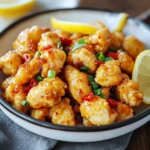
Crispy, golden chicken breasts tossed in a tangy lemon-soy sauce with a hint of garlic and ginger. Serve with steamed jasmine rice for a balanced, restaurant-quality meal. This halal-friendly recipe uses double-fried chicken and gluten-free cornstarch for a glossy, umami-rich glaze.
- Prep Time: 25
- Cook Time: 30
- Total Time: 55
- Yield: 4 servings
- Category: Dinner
- Method: Frying, Stir-Frying
- Cuisine: Chinese
- Diet: Halal
Ingredients
1.5 lbs boneless chicken breasts (about 4 pieces)
1 cup all-purpose flour
1 tsp baking powder
1 egg, lightly beaten
2 tbsp cornstarch
1/4 cup soy sauce (gluten-free if needed)
Zest and juice of 2 lemons
2 tbsp honey or sugar
1 tbsp toasted sesame oil
1 tbsp rice wine vinegar
1 tbsp cornstarch
2 garlic cloves, minced
1 tbsp fresh ginger, grated
1 red chili, finely sliced (optional)
2 tbsp peanut oil or vegetable oil
Steamed jasmine rice, for serving
Instructions
Cut chicken into 2-inch pieces
Whisk flour, baking powder, 1 tsp salt, and pepper
Coat chicken in flour mixture, then dip in egg, then dredge in remaining flour mixture
Heat oil in a wok or large skillet over medium-high heat
Fry chicken until golden (3-4 mins), transfer to paper towels
Sauté garlic, ginger, and chili in wok for 30 seconds
Combine soy sauce, lemon juice/zest, honey, vinegar, and sesame oil in a bowl
Whisk in cornstarch and 2 tbsp water to make a slurry
Return chicken to pan, pour in sauce, and simmer 2-3 mins
Top with fresh cilantro and sliced lemon
Notes
Use a non-dairy substitute like tamari for soy allergies
Double sauce for extra tangy coating
Air-fry chicken (400°F, 6-8 mins) if avoiding deep-frying
Store leftovers in airtight containers up to 3 days
Pair with steamed bok choy for a complete meal