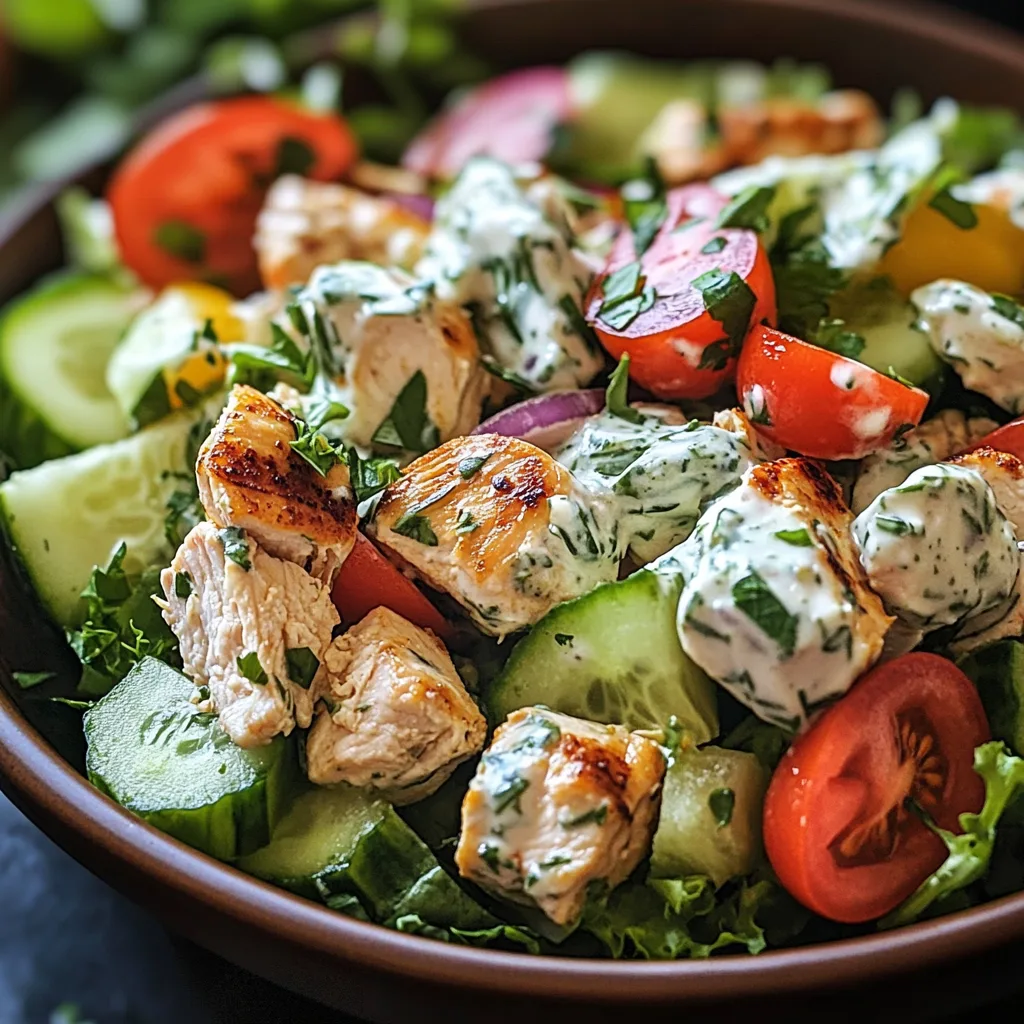
What is Tzatziki Chicken Salad?
Tzatziki Chicken Salad is a vibrant, protein-rich dish that marries the bold flavors of Greek cuisine with the refreshing coolness of fresh vegetables. The name derives from tzatziki, a classic Greek sauce made from yogurt, cucumber, and garlic, which gives this salad its signature tangy depth. Originating from the Levantine and Greek traditions of blended spreads, tzatziki has evolved into a staple in Mediterranean cooking, prized for its ability to balance fatty proteins with bracing brightness. This salad transforms the sauce from a condiment to a star, pairing it with tender chicken, crisp greens, and pungent herbs for a satisfying meal that’s as nourishing as it is flavorful.
What sets this recipe apart is its layered textures and complexity: the creamy tzatziki cuddles the crunch of romaine, the smoky tang of pepperoncini peppers, and the saltiness of Kalamata olives. Unlike typical picnic salads that rely on vinaigrettes or heavy oils, the tzatziki sauce here adds a cooling contrast that refreshes the palate with every bite. It’s a dish that feels both indulgent and light, making it perfect for warm weather or any time you crave a taste of the Mediterranean.
Reasons to Try Tzatziki Chicken Salad
There are countless reasons to pull this recipe out of your culinary toolbox, starting with its remarkable versatility. Busy weeknights call for meals that come together in less than thirty minutes, and this salad delivers without handheld prep—simply mix the tzatziki, toss the vegetables, and layer the chicken. Its no-meat-waste approach (using pre-cooked chicken) makes it ideal for families or meal preppers. Plus, it’s naturally gluten-free and can be adapted for vegetarian or vegan preferences with a few swaps.
Not only does this salad meet the nutritional benchmark with 25g of protein per serving, but it also invites customization. Swap romaine for kale, add grilled pita, or sprinkle in your favorite whole grains for a heartier version. New cooks will appreciate its forgiving nature—there’s little room for error in assembly—and seasoned chefs can experiment with spice levels or cure variations in the tzatziki. Whether you’re hosting a weekend gathering or craving a quick solo dinner, this recipe offers fresh, satisfying results.
Ingredients Needed to Make Tzatziki Chicken Salad
1 cup plus 2 Tbsp plain Greek yogurt
½ cup grated cucumber (seed removed to avoid excess moisture)
2–3 garlic cloves, minced (adjust to taste)
2 Tbsp extra virgin olive oil
2 Tbsp finely chopped fresh dill (or 1 Tbsp dried dill, rehydrated)
Pinch of salt and freshly ground black pepper
2 cups cooked chicken, chopped (white or dark meat works)
2 cups chopped romaine lettuce
1 cup halved grape tomatoes or cherry tomatoes
½ cup sliced pepperoncini peppers (mild Italian or Greek)
½ cup sliced Kalamata olives
¼ cup chopped red onion (pink onion is a good sub)
½ cup crumbled feta cheese (optional; use vegan feta as a swap)
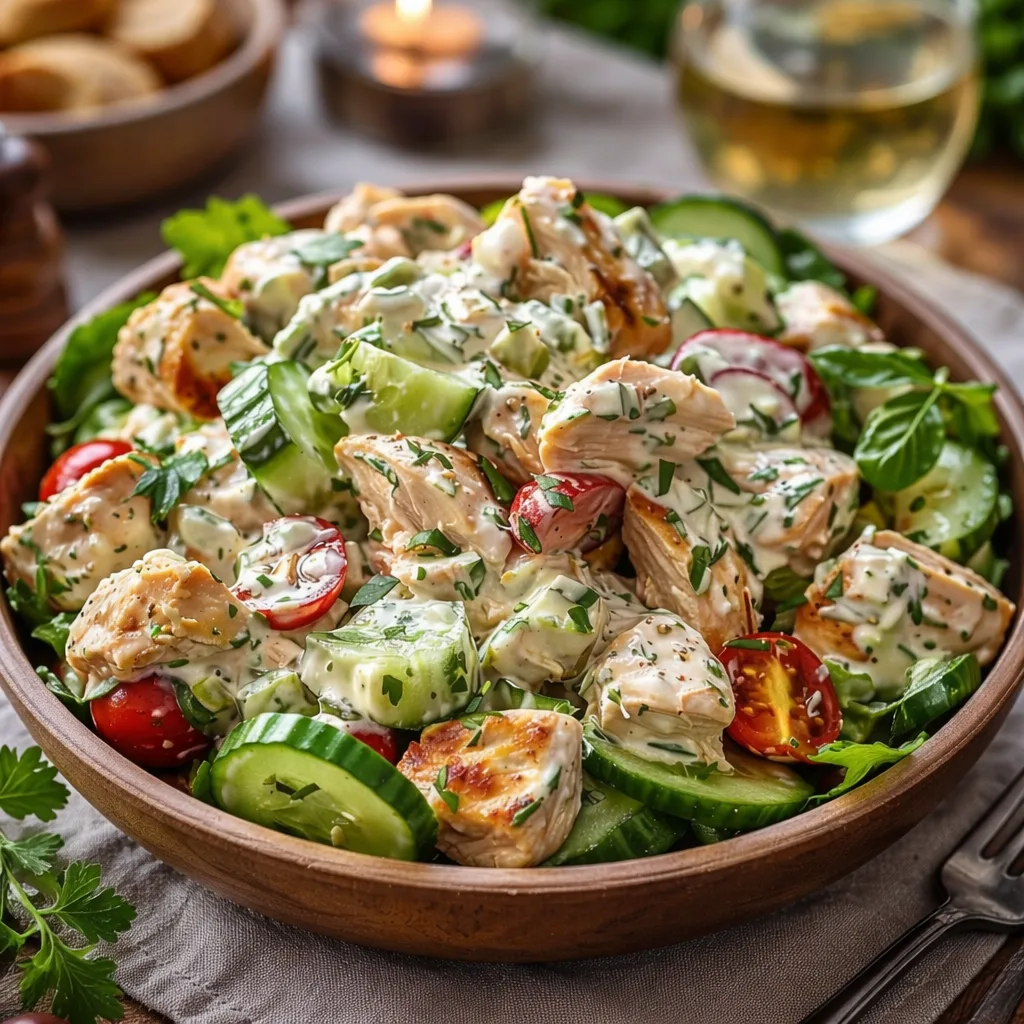
Instructions to Make Tzatziki Chicken Salad – Step by Step
Step 1: Start by making your tzatziki sauce. In a mixing bowl, gently stir the Greek yogurt, grated cucumber, and minced garlic until combined. The yogurt’s thickness will help thicken the sauce, but if it feels too loose after resting (around 10 minutes), strain the cucumbers further through a fine mesh strainer. Add the olive oil and dill, then season with salt and pepper. Taste and adjust—tzatziki needs robust flavors to stand up to bold vegetables.
Step 2: Preheat a food chopper or use a mandolin to slice the romaine, tomatoes, pepperoncini, and red onion. A sharp knife also works, but uniform cuts enhance texture balance. Toss the vegetables in a large bowl to distribute ripeness and sharpness evenly. These ingredients should retain their crunch, so avoid over-handling to preserve their crisp structure.
Step 3: Spread the chopped chicken across the vegetable base. This layering adds depth, allowing each component to remain distinct yet harmonious. Use leftover rotisserie chicken, grilled chicken breast, or poached thighs—tender, room-temperature meat wins over raw. The chicken should distribute in a single layer, not a mound, so the tzatziki can coat it evenly later.
Step 4: Pour the tzatziki sauce over the salad, using about 2/3 of the total. Again, drizzle rather than drench to keep the sauce from drowning textures. Work it into the chicken and let it absorb, then scrape the bowl to mix lightly. Don’t over-mix; we want to maintain the span of flavors as much as the contrast in textures.
Step 5: Finish with a generous scattering of feta cheese. This step anchors the salad with saltiness, drawing out the dill’s herbal notes. For a non-dairy version, skip the cheese or sprinkle toasted pine nuts for crunch. Serve chilled or at room temperature, depending on preference. Tzatziki thrives when it’s slightly warm or just-chilled—it’s a dish that adapts to your mood.
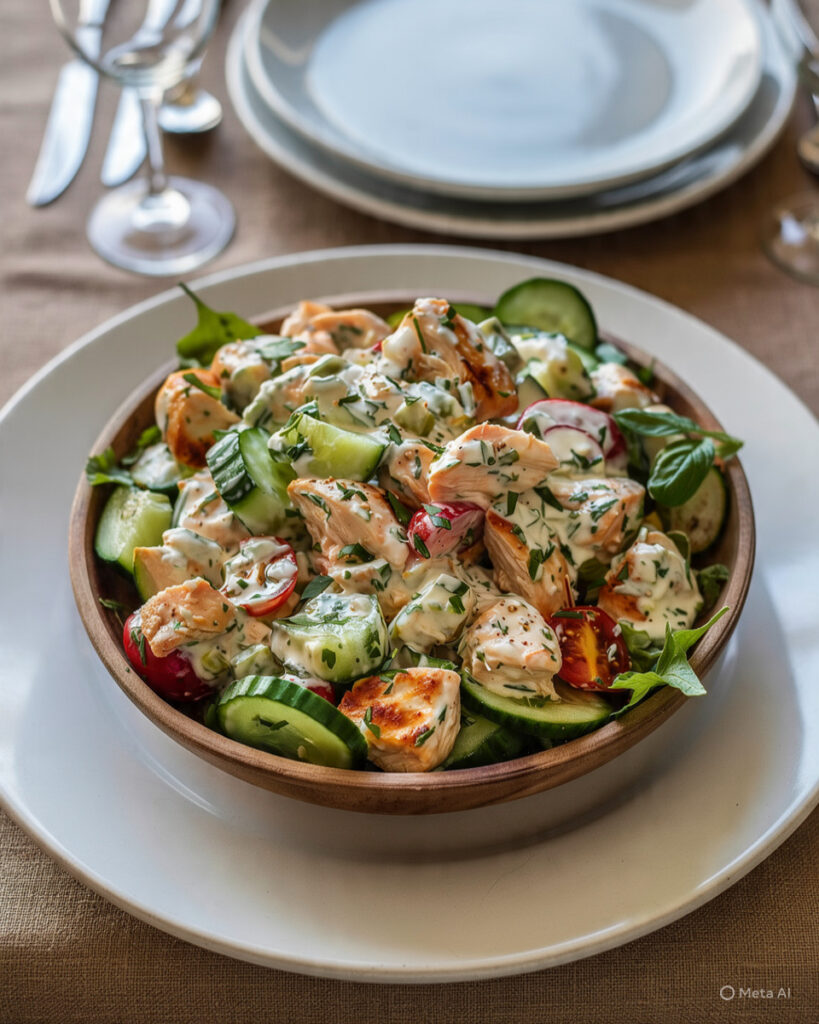
Chef’s Tips for a Perfect Result
- Strain cucumbers in a cheesecloth for 15–20 minutes to remove excess water. This prevents a runny sauce.
- Use full-fat Greek yogurt for an ultra-creamy texture; low-fat versions won’t achieve the same richness.
- Rest the tzatziki for 30 minutes before serving to let flavors meld—scents and brightness develop more fully.
- Balance the heat: Add a pinch of red pepper flakes if you prefer a spicy kick, or reduce garlic to 1 clove for a milder profile.
- Cook the chicken ahead; rotisserie or baked tenderloins (chilled and thawed) work best for no-fuss assembly.
Variations and Substitutions
Gluten-Free Alternative: This salad is inherently gluten-free, but ensure your olive ingredients are certified gluten-free (some brands add gluten-containing spices). Use almond meal instead of breadcrumbs if marinating the chicken.
Low-Carb Version: Omit grain-based additions like pita (opt for avocado instead) and reduce feta for lower carbs. The romaine base keeps it keto-friendly.
Vegan Option: Substitute vegan feta, plant-based yogurt (cashew or coconut), and hummus (optional) for the chicken. The texture remains surprisingly similar.
Budget Swap: Use store-brand ingredients (many offer excellent farmed olives and dill). Frozen spears of pepperoni can halve prep time—roasted beforehand deepens flavor.
Dairy-Free Adaptation: Replace yogurt with unsweetened coconut milk and feta with nutritional yeast-sprinkled chickpeas for umami. Richness stays intact, if you choose full-fat coconut milk.
How to Serve and Pair
Elevate this dish by serving in tall, glass jars for a make-ahead picnic, or arrange on a tiered dish with small spoons for an appetizer style. Pair with a crisp white wine like Assyrtiko for Greek authenticity, or a simple rosé for summer ease. For a casual touch, serve on thick slices of crusty pita with a side of warm pita chips—the yogurt sauce drizzled over will make the chips extra addictive.
To present it as a main course, serve in an eye-catching wooden salad bowl, garnished with fresh dill sprigs and edible flowers for summers. If you’re serving for a crowd, divide into parchment cones for breezy buffet-style dining. The briny, herbaceous, and bright flavors are best appreciated at room temperature, so let it air-chill for 10 minutes before serving.
Storage and Reheating
Refrigerator: Store in an airtight container for up to 3 days. The chicken and feta may soften slightly, but the tzatziki remains fresh if well-sealed. Keep the tzatziki separate if saving past 24 hours.
Freezer: Freeze the chicken and tzatziki sauce (without feta) in labeled batches for 1–2 months. Thaw overnight and stir fresh herbs in before serving. Salads with cheese or herbs don’t freeze well due to texture changes.
Room Temperature: Serve within 2 hours of assembly for optimal crispness. For parties, refrigerate between serving rounds in a large, sealed dish.
Reheating: Reheat in a 300°F oven for 10 minutes (tzatziki needs gentle heat). Skip the tzatziki when reheating—warm it separately and toss at the end. Microwave use sterilizes the oils in the yogurt, so it’s best reserved for warming the chicken only.
Nutritional Values
Per serving (2 people total):
Calories: 480
Protein: 25g
Carbohydrates: 12g
Fat: 34g
Fiber: 3g
Approximate values.
Frequently Asked Questions
Q1: Can I use mayonnaise in the sauce instead of yogurt?
Absolutely! Substitute Greek yogurt with a ½ cup mayonnaise and ½ cup buttermilk to mimic the tang. The texture will be denser but still smooth and supportive of bold flavors.
Q2: How do I know when the tzatziki is done?
It should be well-combined and thick but pourable, with visible dill flecks and garlic specks. Taste it—and if it sings with brightness, it’s ready. Resting it for 15 minutes lets the flavors mature.
Q3: Why is my salad getting soggy quickly?
Excess water from unseeded cucumbers is likely the culprit. Drain them for 20 minutes in a cheesecloth sac, or salt the vegetables earlier to draw out water. Serve just before eating for crunch.
Q4: Can I make the tzatziki ahead?
Yes! Make it 24 hours in advance and store it in the fridge. It tends to thicken slightly overnight; loosen it with ¼ cup water or olive oil, if needed.
Q5: What’s the best way to customize this salad?
Add a handful of pistachios, crumbled cooked beets, or torn basil for an earthy twist. For smoky depth, char the tomatoes slightly under the broiler before adding.
Conclusion
Tzatziki Chicken Salad is the embodiment of Mediterranean simplicity—vibrant, nourishing, and adaptable to your kitchen’s rhythm. By mastering the balance of creamy, sharp, and fresh flavors, it becomes a canvas for creativity. Give this recipe a try, let the tzatziki’s tang work its magic, and savor every spoonful the next time you’re craving a wholesome Greek-inspired meal. Its cool, crisp appeal and bold dill undertones make it a one-of-a-kind powerhouse for the soul and the plate alike.