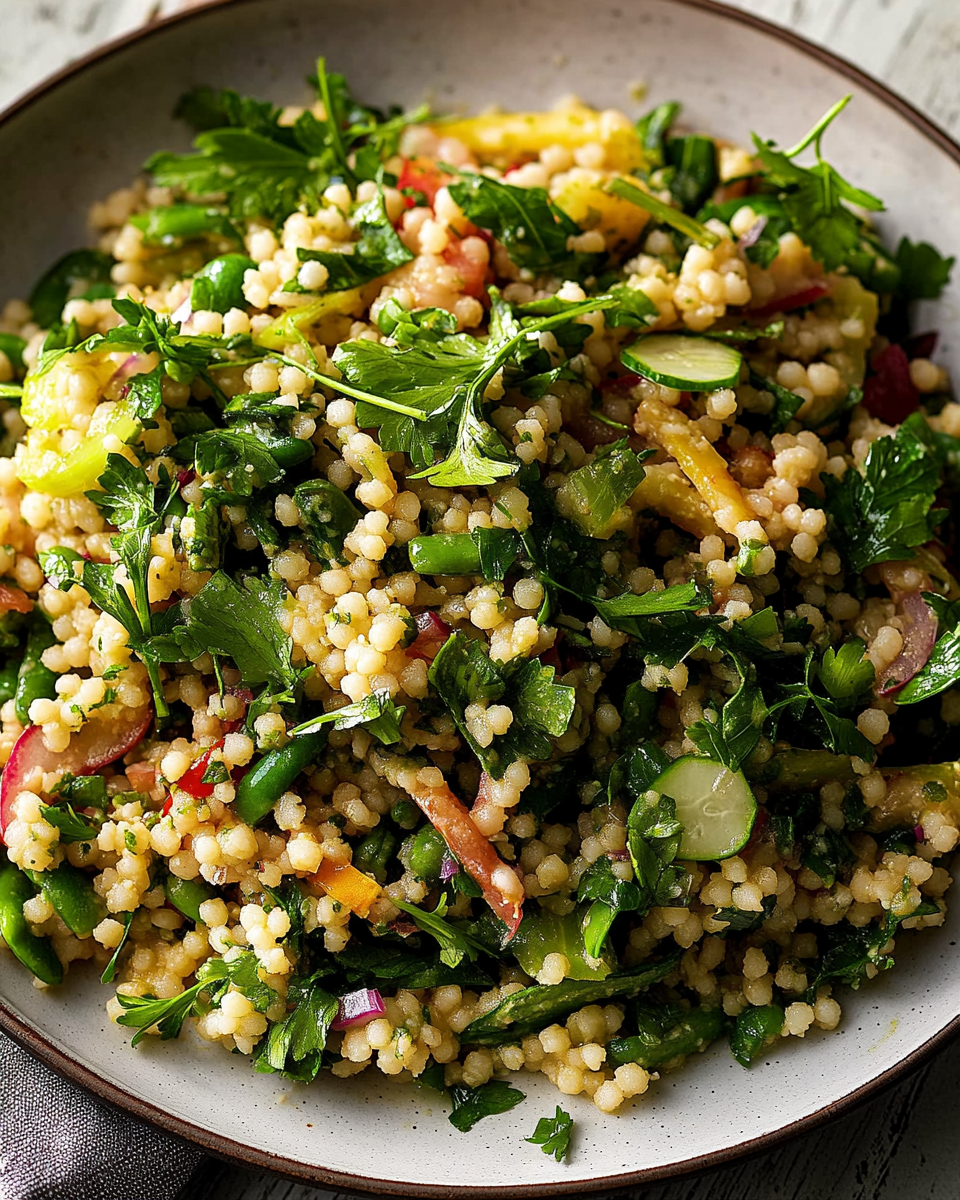
What is Spring Couscous Salad?
Rooted in the vibrant flavors of Middle Eastern cuisine, Spring Couscous Salad is a celebration of fresh, seasonal ingredients. This dish masterfully blends the nutty warmth of pearled couscous with tender English peas, peppery arugula, and fragrant herbs like parsley and mint. Nestled in this medley are roasted pistachios for a satisfying crunch and a homemade za’atar-laced marinade that marries the tang of lemon, the earthy bite of garlic, and the citrusy pop of sumac.
Though it looks like a modern summer staple, this recipe draws inspiration from Levantine traditions where couscous salads are prepared for joyous gatherings and easy weeknight meals. The key to its uniqueness lies in the balance between bright acidity (from lemon and sumac) and aromatic herbs (like mint and parsley), creating a dish that’s as refreshing as it is substantial.
Reasons to Try Spring Couscous Salad
For busy cooks craving something hearty yet guilt-free, this salad hits all the notes. It comes together in 45 minutes flat, requiring minimal hands-on time but delivering restaurant-quality results. The fibrous arugula and protein-rich couscous make it a nutrient-packed meal, perfect for family dinners or vegan-friendly gatherings. If you love bold flavors that dance on the tongue, the garlicky za’atar marinade will become your new obsession.
This dish is a revelation for beginner cooks. When I first tried making it for my in-laws in Manhattan, I worried about under-seasoning, but the liberal salt rule and clear step-by-step guidance saved the day. It’s also holiday-ready—picture it beside grilled lamb or as a main course for a cozy spring picnic. Don’t let its simplicity fool you; this salad is anything but basic.
Ingredients Needed to Make Spring Couscous Salad
- Red Onion (1/2 small, thinly sliced)
- Lemon Juice (4 tbsp, fresh from the market)
- Lemon Zest (1 tsp, grated directly into the bowl)
- Kosher Salt (1 tsp, plus more later in the marinade)
- English Peas (1 cup, frozen or fresh, blanched)
- Pearl Couscous (1 cup, paired with 1 1/2 cups water and 1 tsp salt)
- Arugula (1 cup, roughly chopped for spooning convenience)
- Dried Parsley (1/2 cup, firmly packed and minced)
- Dried Mint (1/2 cup, finely chopped)
- Roasted Pistachios (1/2 cup, roughly chopped for texture)
- Olive Oil (4 tbsp, high-quality extra virgin for depth)
- Garlic Cloves (3 whole, left whole until cooking)
- Za’atar (2–3 tsp, or homemade blend if unavailable)
- Ground Cumin (1/2 tsp, subtle warmth)
- Sumac (to serve, dusted at the end for tang)
Instructions to Make Spring Couscous Salad – Step by Step
Step 1: Start with the peas—this green star needs precision. Fill your pot with salted water and bring to a rolling boil before gently adding the peas. Set a timer for 90 seconds (I use my phone on count-down mode). The goal is al dente sweetness, not mushy globs. Drain immediately into a colander and transfer to a clean bowl. The pot? You’ll reuse it for the couscous, so don’t clean it yet!
Step 2: Now the couscous. The same pot now shifts from blanching to simmering. Add the pearl couscous, water, and a liberal pinch of salt. Stir once to separate the grains, then cover and turn down the flame to a gentle murmur. After 8–10 minutes (when the water disappears), let it rest like a prime rib—5 minutes off heat, then fluff with a fork. Toss with a teaspoon or two of oil to avoid clumps. Trust me, you’ll thank yourself later when serving.
Step 3: While the couscous rests, let the onions caramelize their flavor into the bowl. In a heatproof container, layer the red onion slices and pour the lemon juice, zest, and salt over them. The lemon zest adds this incredible citrus finish. Use your hands to massage the liquid into the onion—your kitchen will smell like a Mediterranean street corner now.
Step 4: Chop your greens and herbs during the couscous’s rest. A “rough chop” (as the recipe says) means you can grab a spoonful without pulling a leaf into your eye. Combine everything in the bowl reserved for the onions: couscous, peas, arugula, parsley, mint, and pistachios. The pistachios add this lovely blank canvas of crunch, so don’t skimp!
Step 5: Create the marinade. Clean your pot with paper towels (no need for water—residual heat keeps it fragrant) and add the garlic cloves and olive oil. Sauté on moderate heat until the garlic just turns golden (a matter of seconds at max). The magic happens when you stir in za’atar and cumin—this spice cocktail is where the dish becomes memorable. Pour the hot oil into the salad bowl and let it work its magic for at least 5 minutes before tossing to avoid steaming the greens.
Step 6: Finalize with a flourish: Top with sumac and a final pinch of salt. I go crazy with sumac—it’s like lemon dust on steroids. Taste and adjust the seasoning, though the recipe calls for a lot of salt. Why? The za’atar, pistachios, and parsley all cradle a lot of flavor, so you need balance.
Chef’s Tips for a Perfect Result
- Blanch peas aggressively: Time is critical—off by just 10 seconds can make the difference between sweet and sodden.
- Slice the onions now: The lemon juice begins to work while the couscous cooks, not after.
- Use a wide mixing bowl: It prevents the salad from becoming a greasy mess when tossing with the hot oil marinade.
- Don’t skip the rest time for couscous: Under-ripped grains = gluey bites.
- Toast your pistachios before chopping: They become more deeply nutty and less boring.
- Use za’atar as your seasoning workhorse: It simplifies the marinade and packs in flavor complexity.
Variations and Substitutions
- Vegan Option: Swap pistachios for toasted slivered almonds. The same nutty flavor on a plant-based canvas.
- Gluten-Free Alternative: Replace couscous with quinoa (well-drained to avoid clumping). Adjust water ratio to quinoa’s 2:1 guideline.
- Budget Swap: Use chickpeas from a glass jar for protein punch. Lower the olive oil by 1 tbsp to compensate.
- Low-Carb Version: Eliminate couscous entirely. Add extra spinach and capers for that textural pop.
- Lighter Adaptation: Replace olive oil with Greek yogurt for a tangy base (halve the lemon juice to avoid over-acidicity).
How to Serve and Pair
Plate this salad in a wide ceramic bowl to highlight its vibrant colors. For a rustic touch, place individual portions in shallow serving dishes. Pair it with grilled salmon or falafel for protein, or let it shine as a meat-free main. Garnish with whole mint leaves and additional pistachios while your guests marvel at your presentation.
For global flair, serve alongside tzatziki and pita bread. In NYC, I love drizzling pomegranate molasses over the top for a tangy twist. This salad is equally at home at a rooftop spring brunch as it is on a weeknight dinner table.
Storage and Reheating
Refrigerator: Store in an airtight glass jar for up to 3 days. Layer greens on top to retain crispness. Add the zest and sumac before serving to prevent sogginess.
Freezer: Not recommended—pearled couscous absorbs moisture, and herbs lose their potency. Stick to fresh batches instead.
Room Temperature: Keeps for 1–2 hours in a covered container. Perfect for picnics or brunches with slow service timelines.
Reheating: Warm over low heat on the stovetop. Avoid drying out by stirring frequently; if needed, add a splash of water or lemon juice.Microwave is possible but will likely wilt the greens into submission—stick to the pan method.
Nutritional Values
- Calories: 380 per serving
- Protein: 10g (from couscous and pistachios)
- Carbohydrates: 42g (with 12g fiber for satiety)
- Fat: 18g (mostly healthy unsaturated from olive oil and nuts)
- Fiber: 7g (thanks to arugula and couscous feed)
Approximate values.
Frequently Asked Questions
Can I use regular cumin instead of za’atar?
Yes, but za’atar’s floral-anise notes are non-negotiable for authenticity. The recipe allows a homemade alternative: mix 1 tsp each of sumac, sesame seeds, oregano, thyme, cumin, and coriander with 1/4 tsp salt.
How do I know when the couscous is done?
The grains should be tender but firm to the bite with a subtle chew. A good test: after 10 minutes, insert a skewer—it should come out clean with no visible water. Let it rest }
PrintSpring Couscous Salad
A vibrant Middle Eastern-inspired salad blending pearled couscous, tender English peas, arugula, and a za’atar-lime marinade. Infused with mint, parsley, and roasted pistachios, this dish balances tangy brightness and earthy warmth for a refreshing, protein-packed main course or side.
- Prep Time: 20
- Cook Time: 12
- Total Time: 45
- Yield: 4-6 servings
- Category: salads
- Method: Steaming, Cooking, Marinating
- Cuisine: Middle Eastern
- Diet: Vegetarian/Vegan-Friendly
Ingredients
Red Onion (1/2 small, thinly sliced)
Lemon Juice (4 tbsp, fresh)
Lemon Zest (1 tsp)
Kosher Salt (1 tsp, plus extra)
English Peas (1 cup, frozen or fresh)
Pearl Couscous (1 cup)
Water (1 1/2 cups)
Arugula (1 cup, chopped)
Dried Parsley (1/2 cup, minced)
Dried Mint (1/2 cup, finely chopped)
Roasted Pistachios (1/2 cup, chopped)
Olive Oil (4 tbsp)
Garlic Cloves (3 whole)
Za’atar (2-3 tsp)
Ground Cumin (1/2 tsp)
Sumac (to taste)
Instructions
Fill a pot with water and salt, bring to a boil. Add peas, blanch for 2 minutes, drain.
In a medium saucepan, combine couscous, water, and 1 tsp salt. Cook over medium heat until tender, about 10 minutes. Fluff with a fork.
In a large bowl, combine all marinade ingredients: lemon juice, zest, za’atar, cumin, olive oil, and minced garlic. Whisk until blended.
Add cooked couscous, roasted pistachios, arugula, blanched peas, parsley, and mint to the bowl. Toss to coat. Season with additional salt if needed.
Let marinate at room temperature for 10-15 minutes. Garnish with sumac before serving.
Notes
Za’atar can be substituted with a blend of thyme, sesame seeds, and sumac.
Storage: Keep in an airtight container in the fridge for up to 3 days.
Customization: Add diced cucumbers or feta cheese for extra flavor.