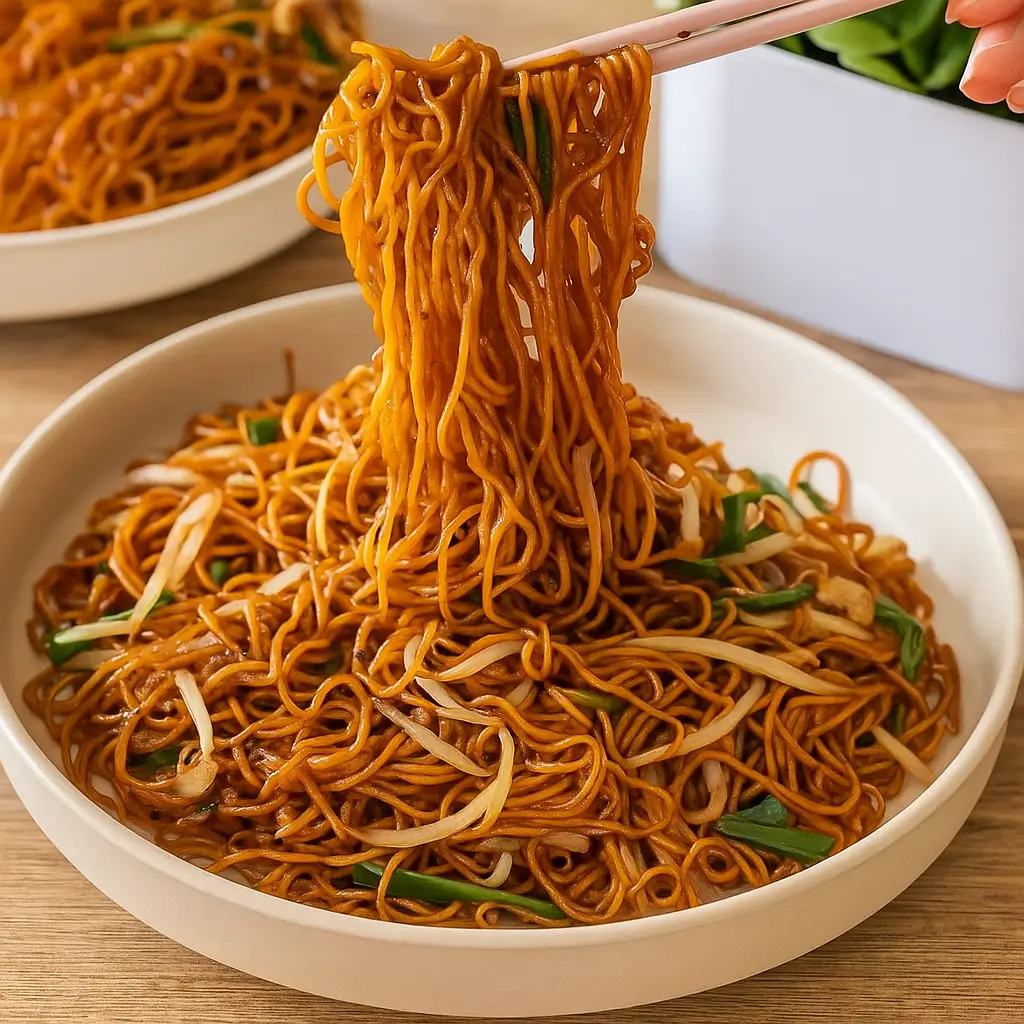
Cantonese Chow Mein is your weeknight dinner superhero—quick, flavorful, and ridiculously satisfying. If you’re juggling work, errands, and feeding picky eaters, this recipe is like a warm, crispy hug from your favorite takeout spot… minus the delivery wait and mystery grease puddles.
With its perfectly crispy noodles and savory umami sauce, Cantonese Chow Mein feels like something you ordered from a top-tier Chinese restaurant, but it actually takes less time than figuring out what to stream on Netflix. Whether you’re cooking for yourself or feeding the whole crew, this dish brings that wok-fried magic to your kitchen without requiring you to master kung fu or own a dragon wok. Stick with me, and we’ll turn a simple pack of noodles into a crunchy, saucy, can’t-stop-eating-it kind of dinner.
Table of Contents
What is Cantonese Chow Mein?
Cantonese Chow Mein is a classic dish from southern China, known for its ultra-thin noodles that get pan-fried until crispy on the outside but still tender inside. Unlike lo mein, which leans soft and saucy, this version goes for that golden crunch, making it more of a texture-lover’s dream.
It’s typically tossed with simple stir-fry veggies like bean sprouts and green onions, then coated in a sweet-savory sauce that hits all the right notes—think soy, oyster sauce, and a little fish sauce for that depth of flavor. No meat here, but you wouldn’t even miss it. It’s the kind of dish that walks the line between comfort food and straight-up flavor bomb. Think of it as the noodle equivalent of your favorite cozy sweater: dependable, low-fuss, and always a good idea.
Reasons to Try Cantonese Chow Mein
First off, Cantonese Chow Mein is fast—like, faster-than-drive-thru fast. We’re talking 15 minutes from “I’m starving” to “Wow, that’s good.” Second, it’s one of those magical recipes that feels indulgent but is loaded with veggies like bean sprouts and onions, so it doesn’t leave you feeling like you need a nap after.
Plus, you don’t need a pantry full of obscure sauces to pull it off—just the basics. It’s also great for households with varying tastes because it’s naturally vegetarian, but easy to pair with chicken, shrimp, or tofu if you want to bulk it up. And hey, if you’ve got that one kid (or grown-up) who “hates vegetables,” crispy noodles covered in a sweet-savory glaze might just change their tune. It’s also a fantastic way to switch things up from your regular pasta rotation. Because honestly? Spaghetti can only carry us so far.
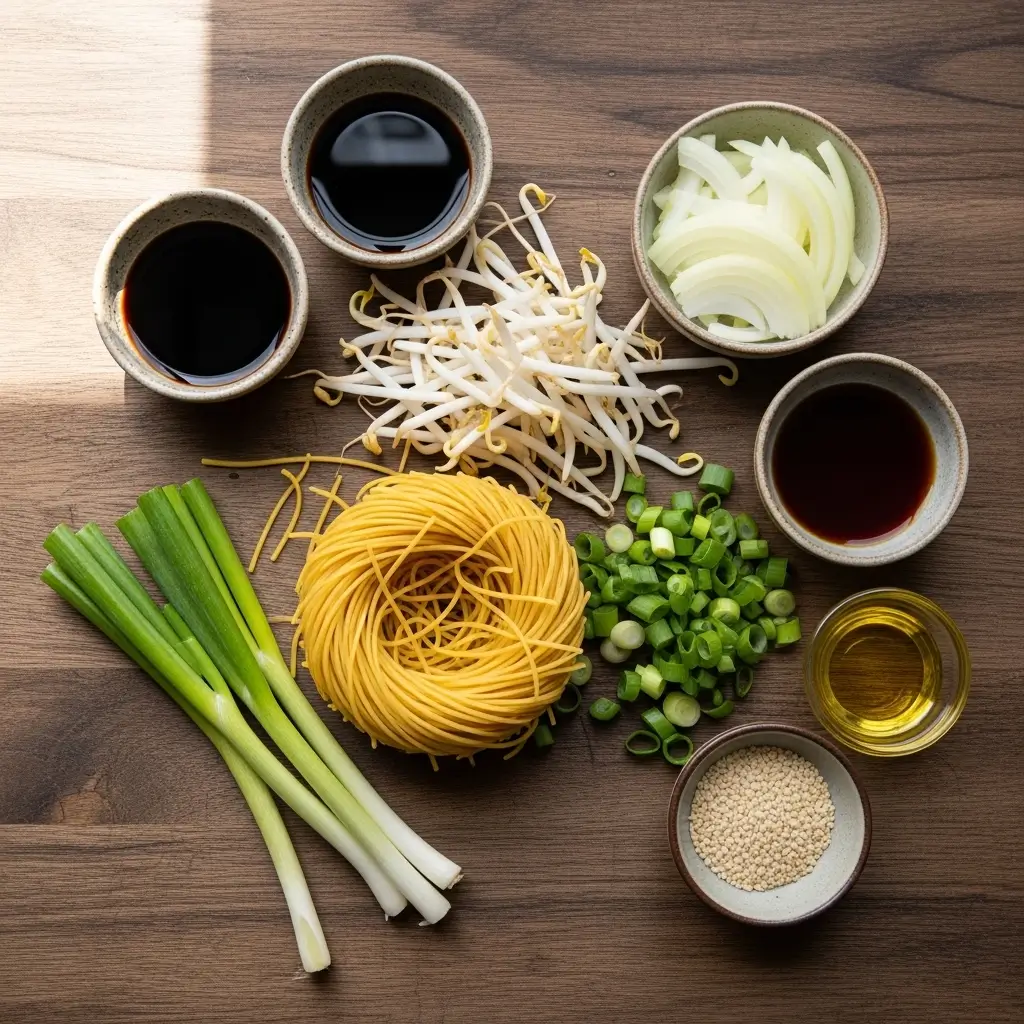
Ingredients Needed to Make Cantonese Chow Mein
- 12 oz thin chow mein egg noodles (Hong Kong–style if possible)
- ½ small yellow onion, thinly sliced
- 5 stalks green onions (cut into 2-inch sections, whites and greens separated)
- 2 cups bean sprouts
- 3 tablespoons corn oil (or any neutral oil)
- 1 teaspoon sesame oil (for finishing)
- 2 tablespoons dark soy sauce
- 1 tablespoon regular soy sauce
- 1 tablespoon oyster sauce
- ½ teaspoon fish sauce
- 1 tablespoon granulated sugar
- 1 tablespoon water
Instructions to Make Cantonese Chow Mein
Ready to make Cantonese Chow Mein at home? This step-by-step guide will walk you through the whole process—from softening your noodles to adding that final splash of sesame oil. Whether you’re a beginner or just looking for a refresher, these detailed steps will make it easy (and honestly, fun) to cook this crispy noodle favorite.
Step 1: Soften the Noodles the Right Way
First things first, get those chow mein noodles ready. Since we’re using Hong Kong–style thin egg noodles, they don’t need boiling. Instead, place the noodles in a large mixing bowl and pour enough boiling water over them to cover. Let them soak for 30 seconds to 1 minute—just until they’ve loosened up and turned tender but still springy.
Be sure to keep an eye on the texture; over-soaking can turn them mushy, and we’re aiming for a crispy finish later. Once ready, drain them thoroughly and set them aside. Want more noodle handling tips? Check out our easy crockpot beef stroganoff, where egg noodles play a delicious role.
Step 2: Mix Up the Cantonese-Style Sauce
Next, let’s prep the flavor bomb of this dish: the sauce. In a small bowl, combine 2 tablespoons dark soy sauce, 1 tablespoon regular soy sauce, 1 tablespoon oyster sauce, ½ teaspoon fish sauce, 1 tablespoon sugar, and 1 tablespoon water. Stir it all together until the sugar dissolves completely.
This sauce is sweet, salty, and umami-rich—basically the soul of Cantonese Chow Mein. If you’re looking for low-sodium or vegetarian alternatives, you can browse our ingredient swaps guide (scroll down to the tips section) for helpful ideas.
Step 3: Sauté Aromatics to Build Flavor
Now it’s time to fire up your wok or large skillet over medium-high heat. Add 1 tablespoon of corn oil and let it heat until shimmering—about 1 minute. Toss in the sliced yellow onion and the white parts of the green onions. Stir-fry for about a minute, just until they’re fragrant and slightly softened.
This step gives your dish that signature depth of flavor. Once the aromatics are sautéed, remove them from the pan and set them aside. They’ll be making a comeback later.
Step 4: Pan-Fry the Noodles (Crispy is Key)
Add another tablespoon of corn oil to your hot pan. Then, in a step-by-step motion, place the soaked noodles into the skillet and spread them out into a thin, even layer. Let them sit untouched for about 2 minutes to crisp up the bottom.
Don’t stir them yet—let that crust form. When it’s time to flip, use a spatula (or two, if needed) and turn the noodles over in sections. Drizzle one more tablespoon of oil around the edge of the pan, and let the other side crisp for another 2 minutes.
This is the magic moment when your Cantonese Chow Mein goes from ordinary to restaurant-worthy. If you’re into golden, crispy textures, you’ll love this step. Want more crispy dinner ideas? Try our cheesy hamburger potato casserole for a different kind of crunch.
Step 5: Add Veggies and Sauce
Now, let’s bring it all together. Add the sautéed onions back to the pan along with the green parts of the green onions and the bean sprouts. Pour in your sauce and gently toss everything together using tongs or chopsticks. Mix from the bottom up to coat the noodles without breaking their crispy texture.
This step-by-step toss is crucial—don’t rush it. Cook for another 1–2 minutes just until the sauce is well absorbed and everything looks glossy and beautiful. Give it a quick taste and adjust the seasoning if needed. A splash more soy sauce? Go for it. Prefer it sweeter? Add a pinch of sugar.
Step 6: Finish with Sesame Oil and Serve
The final touch: drizzle in 1 teaspoon of sesame oil. This adds a fragrant, nutty finish that truly sets this dish apart. Give the noodles one last toss to distribute the oil, then serve immediately.
For the best texture and taste, enjoy your Cantonese Chow Mein hot from the pan. Pair it with a cozy bowl of homemade potsticker soup or some slow cooker orange chicken for a satisfying, easy weeknight meal.
Whether it’s your first time making this dish or your fiftieth, this step-by-step guide makes sure nothing gets lost in translation. Crispy noodles, savory sauce, and a dish that rivals your favorite takeout—what more could you want?
What to Serve with Cantonese Chow Mein
Cantonese Chow Mein is perfectly satisfying on its own, but if you want to round things out, go with something fresh and light. A simple cucumber salad or steamed bok choy adds a cooling contrast to the hot noodles. If you’re feeding a crowd or need protein, pair it with quick teriyaki chicken or even dumplings (store-bought counts!). And if you’re on the cozy-dinner train, a warming bowl of homemade potsticker soup or savory Asian potsticker soup would be right at home. Got leftovers? This also makes a fun brunch base—top it with a fried egg and call it a day.
Key Tips for Making Cantonese Chow Mein
Use the right noodles—thin, fresh chow mein noodles really make a difference. If you can find Hong Kong–style, grab ’em. Don’t skip soaking the noodles; boiling them can turn them mushy. To get that golden crunch, avoid overcrowding the pan. Crisp in batches if needed. Pre-mix your sauce before you start cooking—it’ll save you from scrambling mid-sauté. Don’t overcook the veggies; bean sprouts and green onions should stay crisp and bright. And yes, sesame oil at the end is a must—it adds that nutty aroma that makes this dish pop. Finally, cook with confidence. Wok cooking is quick, so have everything ready and go for it!
Storage and Reheating Tips for Cantonese Chow Mein
If you’ve got leftovers (lucky you!), store them in an airtight container in the fridge for up to 3 days. For the best texture, reheat in a skillet over medium heat with a tiny splash of water or oil. Microwaving works in a pinch but softens the noodles—so if you’re chasing that crisp edge, stick with the pan. This dish doesn’t freeze well, unfortunately. The noodles lose their bite and the veggies go limp. So go ahead, eat it fresh or stash it in the fridge for tomorrow’s lunch.
FAQs
Can I add meat to this recipe? Absolutely! Thinly sliced beef, shrimp, chicken, or tofu all play well here. Cook them first, set them aside, and add them back in with the sauce.
What if I can’t find chow mein noodles? Look for “Hong Kong-style egg noodles” in the refrigerated section of your Asian market. In a pinch, use dry thin egg noodles, but soak them carefully so they don’t get mushy.
Is this recipe spicy? Nope, not one bit! But you can totally add chili oil or sriracha at the table if you like heat.
Can I make this gluten-free? Yes, just swap the soy sauces and oyster sauce for gluten-free versions. Use rice noodles or gluten-free ramen for a similar vibe.
Final Thoughts
Cantonese Chow Mein is that go-to recipe you’ll keep coming back to—easy, satisfying, and packed with flavor. Whether you’re feeding your family on a busy weeknight or just craving something better than takeout, this crispy noodle dish is always a winner. No fancy tools, no fussy techniques—just a hot pan, a handful of pantry staples, and a few minutes. It’s comfort food with crunch, and it deserves a spot in your dinner rotation.
Visit our Pinterest for regular slow cooker recipe updates, or join our Facebook discussions where cooking fans exchange their favorite hearty meal ideas.
PrintCantonese Chow Mein Recipe: Crispy, Saucy, and Ready in 15 Minutes
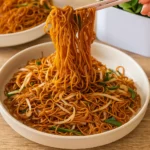
A quick and flavorful stir-fried noodle dish featuring crispy pan-fried egg noodles, savory soy-based sauce, and fresh vegetables—this Cantonese Chow Mein is a delicious takeout favorite made at home in just 15 minutes.
- Prep Time: 5 minutes
- Cook Time: 10 minutes
- Total Time: 15 minutes
- Yield: 2 servings
- Category: Main Course
- Method: Stir-Fry
- Cuisine: Cantonese
Ingredients
- 12 oz chow mein egg noodles (thin fresh noodles, Hong-Kong style)
- 1/2 small yellow onion (thinly sliced)
- 5 stalks green onions (cut into 2-inch pieces whites and greens divided)
- 2 cups bean sprouts
- 3 tablespoons corn oil (or any neutral oil)
- 1 teaspoon sesame oil (to finish)
- 2 tablespoons dark soy sauce
- 1 tablespoon regular soy sauce
- 1 tablespoon oyster sauce
- 1/2 teaspoon fish sauce
- 1 tablespoon granulated sugar
- 1 tablespoon water
Instructions
1. Pour boiling water over your noodles and soak for 30 seconds to 1 minute until softened. Drain and set aside.
2. In a small mixing bowl, add the dark soy sauce, regular soy sauce, oyster sauce, fish sauce, sugar, and water. Mix until the sugar has dissolved.
3. Heat one tablespoon of corn oil in a wok over medium-high heat until hot. Then, add the onions and the white parts of the green onions, and sauté for 1 minute. Remove and set aside.
4. Heat one tablespoon of corn oil in a wok over medium-high heat until hot, about 2 minutes. Then add the noodles and spread them into a thin layer to crisp up, about 2 minutes. Flip the noodles, add one tablespoon of oil around the perimeter of the pan, and cook for an additional 2 minutes until crispy.
5. Add the onion, both green and white parts of the green onion, bean sprouts, and sauce. Gently mix until combined, about 1-2 minutes. Taste and adjust seasoning as needed.
6. Once combined, remove from heat, add sesame oil, and toss to combine. Serve immediately and enjoy.
Notes
For added protein, top with sliced roast pork, chicken, or tofu. Use a nonstick or well-seasoned wok for the crispiest noodle texture. Fresh noodles work best, but if using dried noodles, cook them fully before pan-frying.